The frame of the structure was built of massive sawn horizontal hemlock planks that were mortis-and-tenoned into oak posts on the first floor and dovetailed on the second floor. Throughout the rest of the 1709 structure, one can see several devices including a portcullis, gun ports, and a safe room, which were designed to defend the family from harm during attacks by the Pennacook. However, by the time the house was completed, conflicts with the Pennacook were rare and by the end of the next decade the protective devices in the garrison had no use at all. Its defensive features may have gone unused, but its materials tell a broader story about Indigenous history. The large timbers and the fact that they were mill-sawn, highlight the Gilmans’ actions in destroying both the forests and rivers that had sustained the Pennacook for so long.
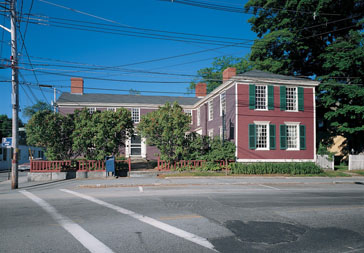
The garrison remained unchanged until 1732, when ownership transferred to Peter Gilman, who received the home from his father, John Gilman, Jr. Peter Gilman operated a tavern in the garrison, a business started by his father in 1719. During that time, Gilman owned at least one enslaved person, a man named Titus who perished while collecting water at the river. Peter was also known as a shopkeeper and may have sold goods from the garrison. By the mid-eighteenth century, Peter Gilman was a highly respected member of the community, having been appointed to the King’s Council during the term of Governor John Wentworth and been a successful proprietor of lucrative businesses. He used his considerable fortune to transform the fortified garrison into a fashionable Georgian style home suitable for his status in Exeter. The interior received elegantly paneled walls and carved mantels, plaster and lath ceilings, and cased beams. The exterior was updated with clapboards, 12-over-12 sash windows, and a reconfigured roofline. A sumptuous Georgian ell with a formal parlor and grand bedchamber were added circa 1770 in anticipation of a gathering of the King’s Council, though such meetings never occurred.

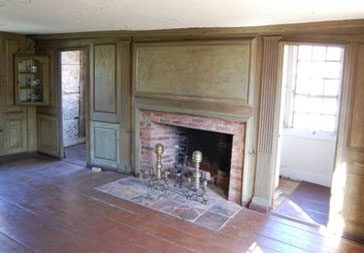 An Obsolete Garrison
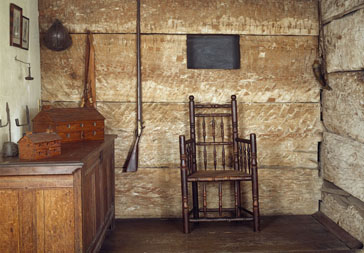 Clifford Family Occupancy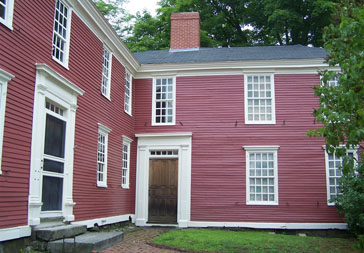
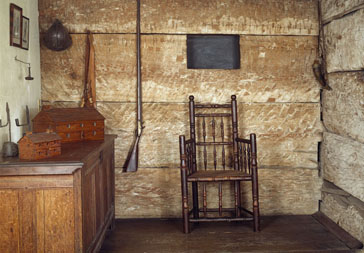 The Dudley Family
 Becoming a Museum