
Perched on a hill that resembles its namesake, Rocky Hill Meeting House in Amesbury, Massachusetts, is a remarkable space. Of the thirty-eight historic properties that Historic New England owns, it is the only site that is not a house museum. Built in 1785, Rocky Hill Meeting House is one of the best-preserved examples of an eighteenth-century New England meetinghouse.
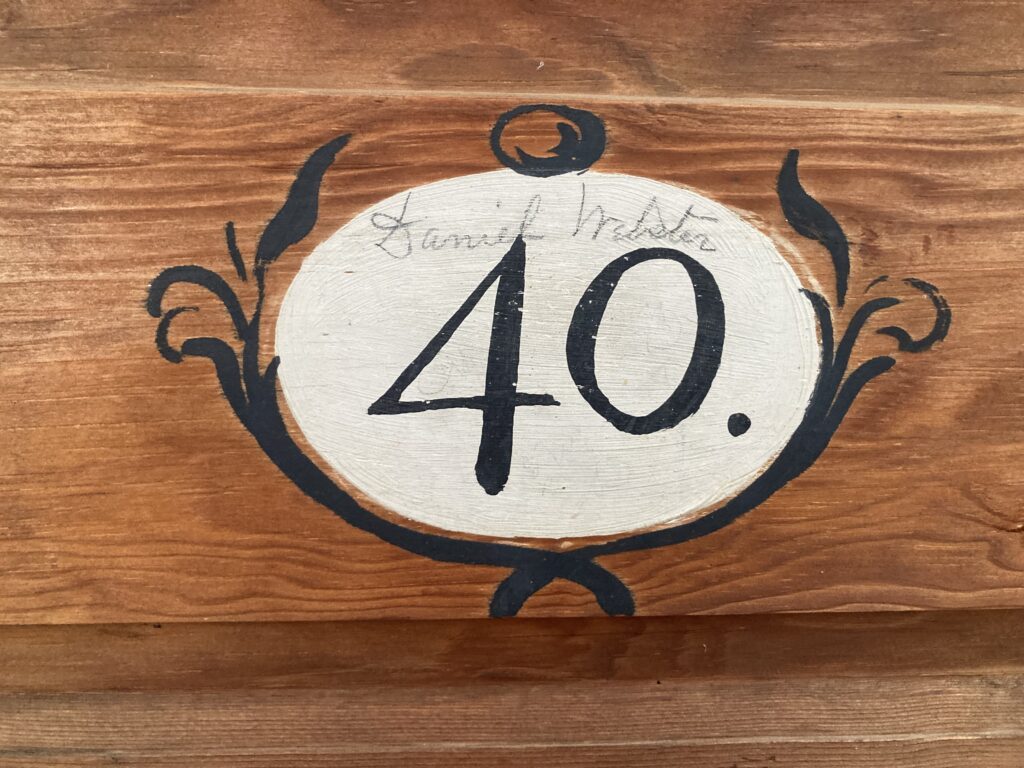
Jane Nylander, a former Historic New England director, once called Rocky Hill Meeting House one of the organization’s “most important buildings,” because of its “almost untouched original condition.” It retains all of its original fittings and its remarkably well-preserved pine-paneled box pews (never painted), each featuring a painted white oval on the door, embellished with a number denoting the pew. The marbleized pillars and pulpit—often the first things to catch visitors’ eyes upon entering—boast original finishes.
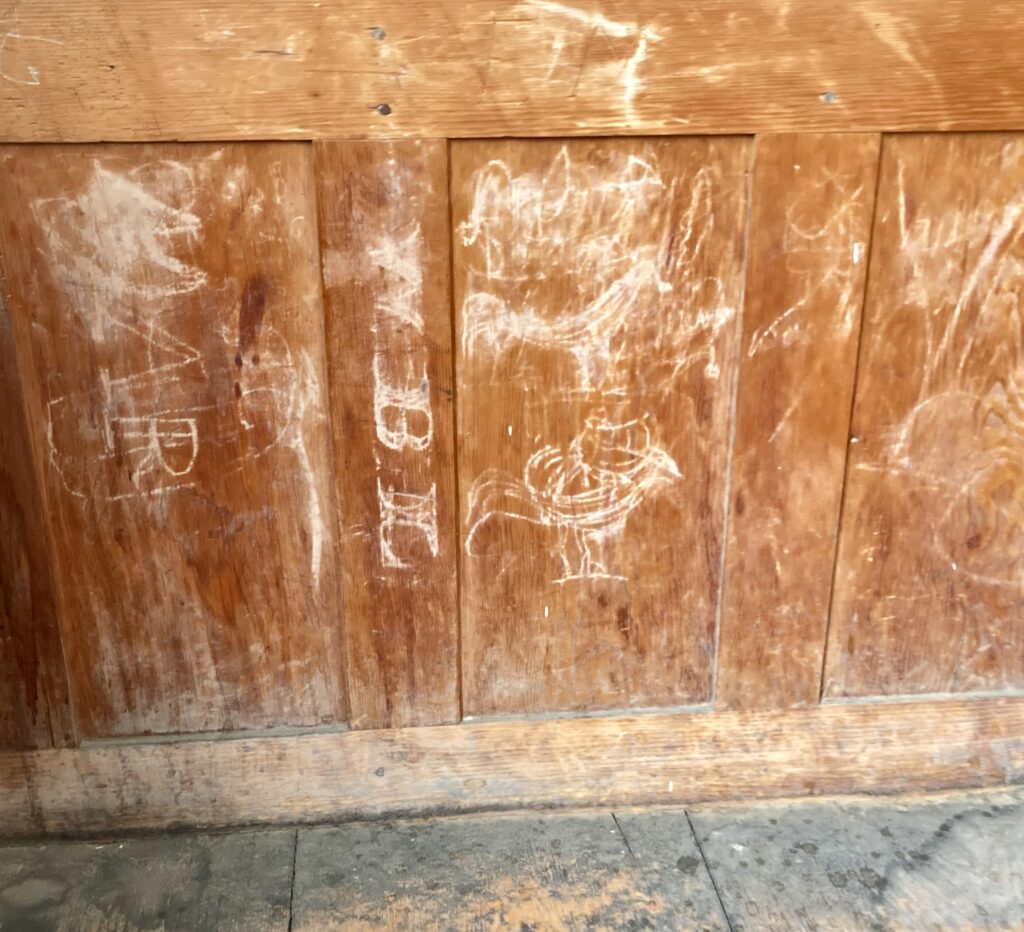
As you make your way to the second floor, you will encounter the real treasure of the meeting house—an extensive collection of graffiti dating back to the late eighteenth or early nineteenth centuries. It begins on the staircase and spreads across the upstairs landing and pews. The graffiti was created using lead pencils and white chalk, as well as engraved with some form of pointed implement. While the white chalk has largely faded, what remains visible today are the bleached marks left behind on the pine by a chemical reaction. When pine is exposed to sunlight over time, it darkens to a golden hue. As the surrounding wood changed, the chalk markings remained.
Graffiti serves as both a public and private way to leave one’s mark on the world, and the inscriptions in the stairwell and second-story pews do just that. Largely composed of initials, names, and dates, the graffiti at Rocky Hill forms a collage of those who worshiped and visited the meeting house during its century of active use. Among these personal etchings, there are also depictions of ships, birds, and various other shapes and symbols.
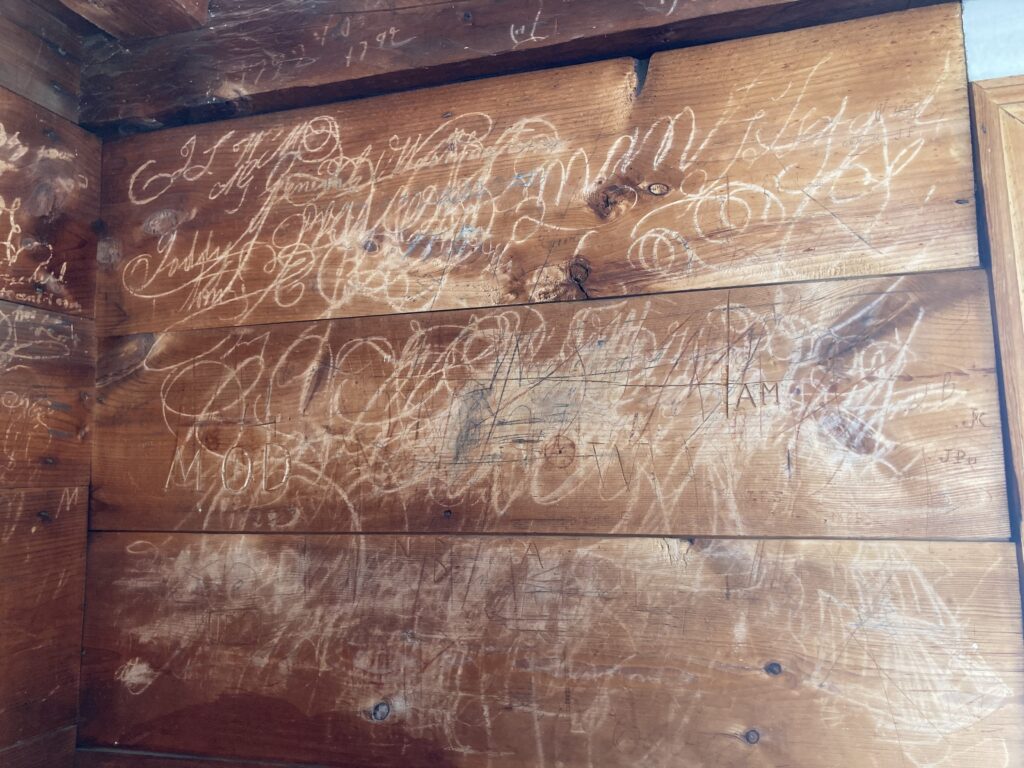
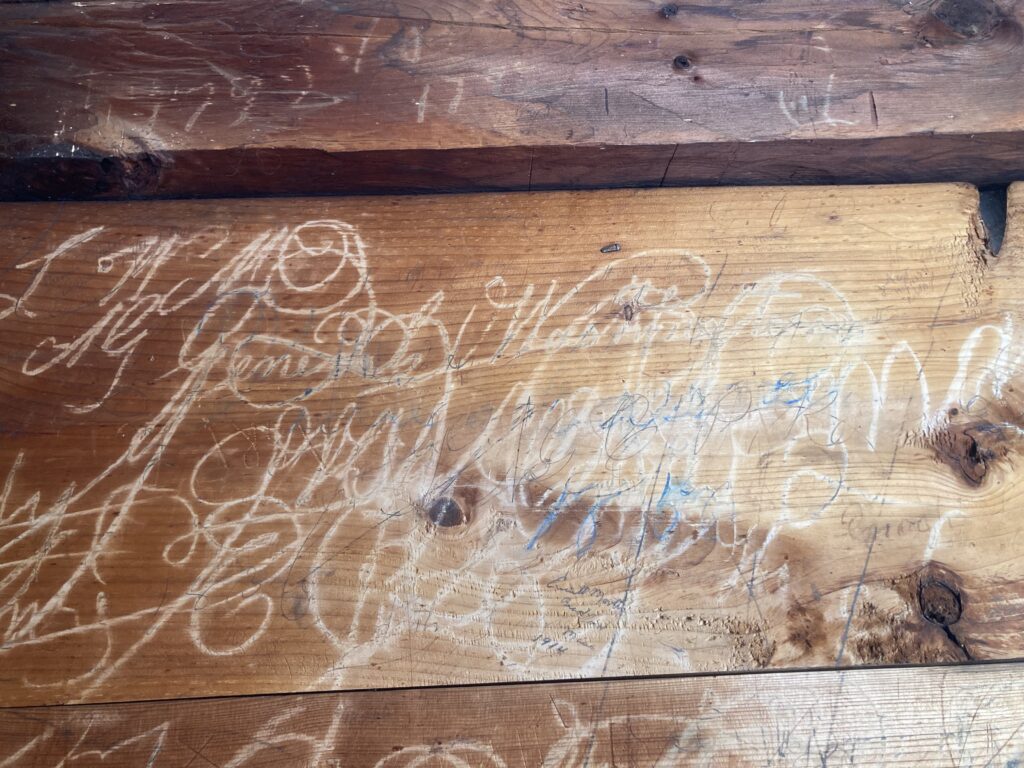
Arguably the most important piece of graffiti at Rocky Hill is a signature on the second-floor landing that reads “Gen Washington.” In 1789, President George Washington traveled through New England, including much of the North Shore. On the morning of October 31, while en route to Portsmouth, New Hampshire, he and his party crossed the Merrimack River from Newburyport to present-day Amesbury. At that time, the meeting house was just four years old. Whether Washington himself inscribed his name or it was added by a spectator chronicling his visit remains a mystery. Hidden among a dozen other names, visitors can search for the signature and draw their own conclusions.
Written by Shanna Sartori, Rocky Hill Meeting House Site Manager
All photos by the author
Sign up to our newsletter for our latest news and events