
A simple truth that can be hard to understand is that accessibility is preservation. At first, the two concepts may seem to be at odds—preservation seeks to prevent change, while accessibility demands it. Preservation-minded people often feel dismayed at the idea of altering something rare and historically significant, but if we consider what preservation means, we can see the symbiosis between the two. Preservation is the practice of protecting and maintaining buildings, landmarks, and places with historical, cultural, or architectural significance. It ensures that the spaces that tell our collective stories are preserved for future generations while remaining functional and relevant in the present.
Any historic house museum you visit was originally designed as a private residence and tailored over the years to meet the needs and desires of its occupants. These alterations are what make house museums so fascinating to explore—we can literally pull stories out of the woodwork. Preservationists usually aim to retain as much of the historic fabric as possible, a principle that Historic New England has proudly upheld for more than 115 years. With each repair, our Preservation Carpentry Crew carefully splices new wood into old, shaping each piece to fit like a jigsaw puzzle. To the untrained eye, the result is seamless and blends effortlessly with the original structure. However, those familiar with carpentry can spot the subtle tags, markings, and other indicators that distinguish our repairs as new yet minimally invasive.
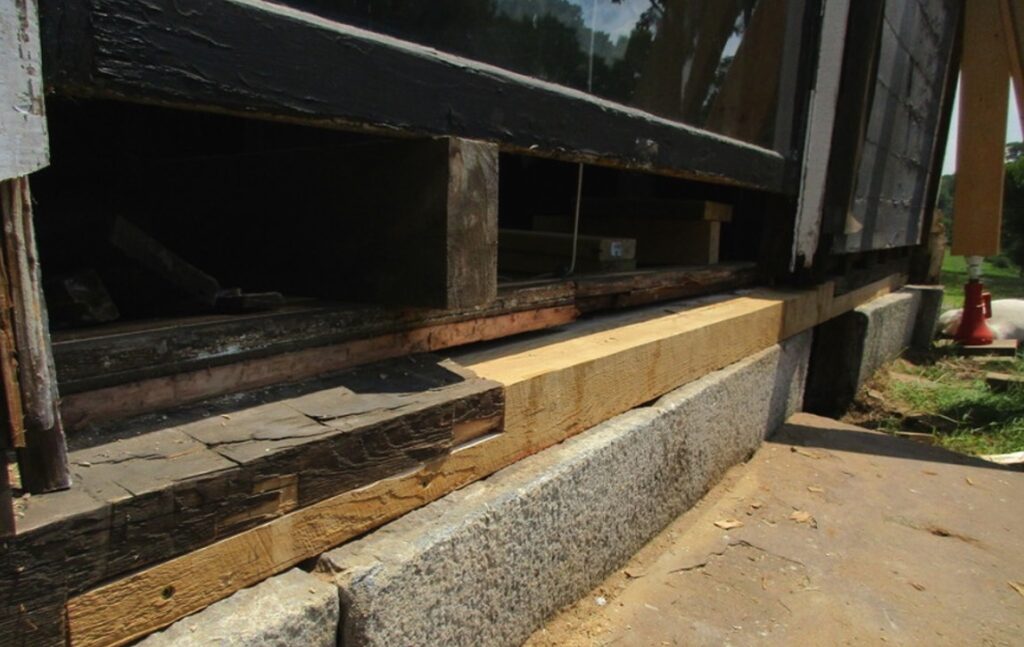
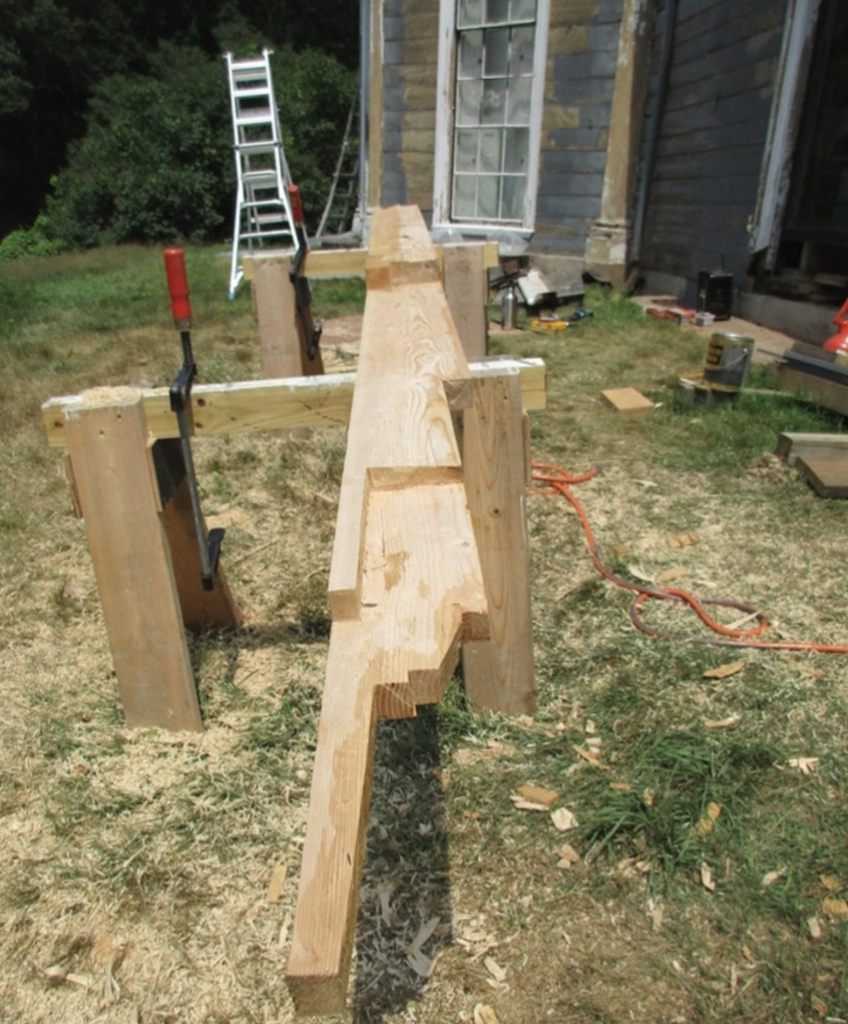
Above are two pictures taken during an exterior repair project completed by preservation carpenters at the Codman Estate in 2018. The picture on the left shows the repair in place, with the new wood a stark contrast to the original sill. The picture on the right shows the complexity of the repair piece, as it was important to retain as much as possible of the original wood.
Historic materials are not always safe, available, or even ideal to use—lead paint, tar and gravel, or eelgrass for insulation either pose health hazards or cannot be sustainably sourced. Historic New England recognizes the importance of completing repairs with in-kind materials, but also recognizes change is sometimes necessary. This is not exclusive to our building work, but also applicable to our landscapes. We alter our horticulture to match the changing climate, such as replacing our dying elms with trees more suitable for withstanding increasing temperatures and invasive pests. The view is the same, and the plants are more resilient.
Before any preservation project takes place at Historic New England, we ask:
By answering these questions, we can determine which stories are important, what features we need to save, how to improve our buildings for our community, and how to incorporate stories as we recover them. The buildings may not have been designed for everyone, but we can certainly consider everyone now.
How do we know accessibility is preservation? In part, we know because the Department of the Interior tells us so. The Department of the Interior’s role is to protect the natural and cultural resources of the United States, and it defines four standards for alterations to historic properties in The Secretary of the Interior’s Standards for the Treatment of Historic Properties. The highest of these is the preservation standard, which places a “high premium on the retention of all historic fabric through conservation, maintenance and repair. It reflects a building’s continuum over time, through successive occupancies, and the respectful changes and alterations that are made.” What is important to note here is that even when meeting the highest standard for the treatment of historic buildings, some change may be necessary. If preservation tells the story of a site’s full history with all the changes, then accessibility is just another part of its story. Accessibility work may mean installing a ramp or handhold, but it also includes widening doorways, adding universal changing tables, and changing lighting to address sensory needs. Historic New England already embraces the mindset of reflecting a building’s continuum with alternative materials, so we see modifying our buildings to make them more accessible as just another chapter in the stories of their “successive occupancies.”
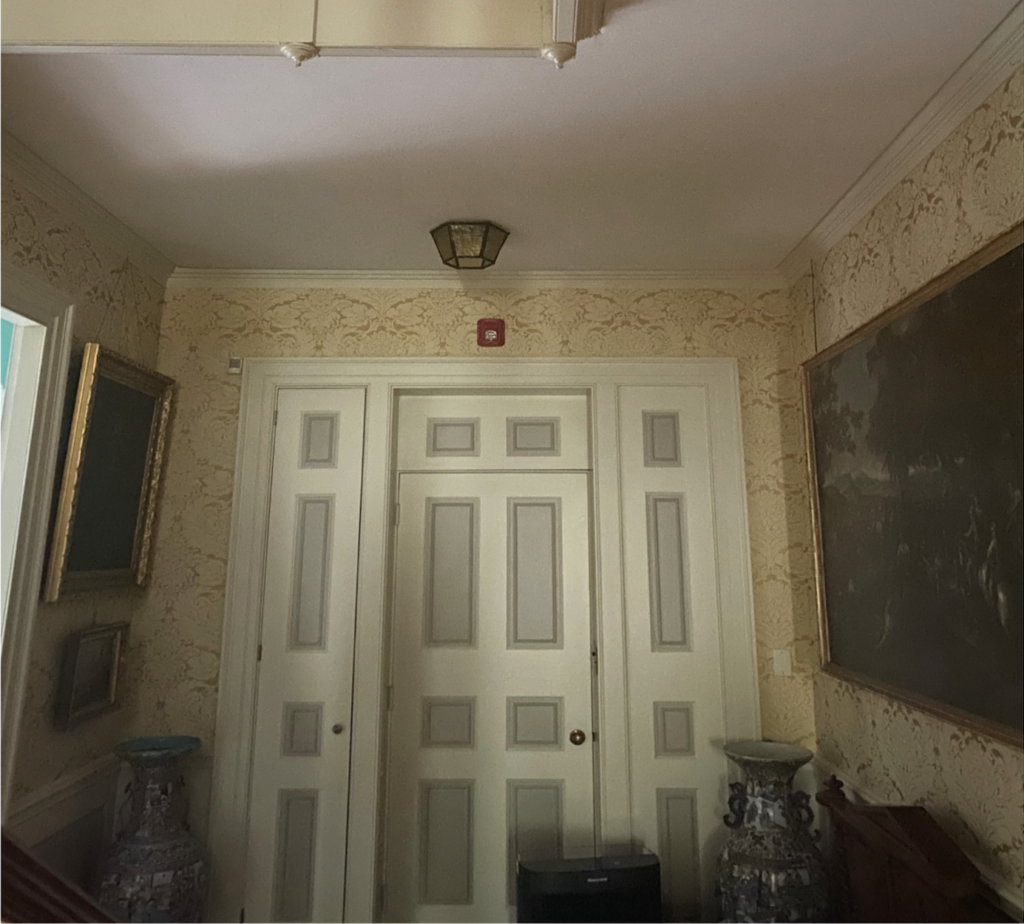
Whenever I discuss preservation and accessibility, I like to end with a photo I took (above) at the Codman Estate in Lincoln, Massachusetts. This sprawling estate of almost sixteen acres was built in 1740 and remained in the Codman family for five generations over 250 years. The estate was bequeathed to Historic New England in 1969, marking the next phase of occupancy and use. The picture shows a decorative door with ornate wallpaper surrounding the woodwork and paintings adorning the walls. Visitors often gawk at the splendor and do not notice the subtle notes of modernity. There is a fire alarm strobe above the door and a motion detector in the left corner. There is a HEPA air filtration device in front of the door. Most imperceptibly, the doorway does not lead to any rooms, but rather an elevator the last Codman to live at the estate installed to make their home more accessible. None of these additions alarm visitors because they are so commonplace now. By continuing to complete physical accessibility modifications, we can all become accustomed to the alterations. Stories are best shared with others, and we want everyone to have the same shared experiences when they visit our sites. And just like the seamless woodwork of our carpenters, all the changes are new but blend beautifully.
Written by Marissa Mayo, Property Care Operations Manager
Historic New England staff photographs.
Sign up to our newsletter for our latest news and events