
On June 25-26, 2026, the Dublin Seminar for New England Folklife will gather at Historic Deerfield, Massachusetts, in an event that marks the fiftieth anniversary of this important institution in the study of the region’s history and material culture. And while the Seminar looks back over its long history—including its half-century of collaboration with Historic New England—the 2026 seminar’s aim, as it marks this milestone, is to look ahead, and explore the subject of Futurecasting, Futurekeeping: New Englanders Imagine Worlds to Come. The topic not only signals the pressing need to think about the future of regional study, but also convenes at a moment that many New Englanders harbor concerns about what is ahead for the region, nation, and globe.
The gathering—co-sponsored by Historic New England, as well as important organizations ranging from the Communal Studies Association to the American Antiquarian Society and Historic Northampton—will contemplate ways New Englanders have envisioned, foretold, and worked to shape various futures over the region’s long history. Speakers will explore how New Englanders have envisioned new futures during moments of crisis or uncertainty.
A wide range of papers will explore topics from literary and intellectual history to material culture, religion, environmental thought, and experiments in communal living. To take a handful of examples: Megan Pickett invites participants to consider how Ray Mungo’s book, Total Loss Farm: A Year in the Life, reimagines the future during the 1960s counterculture—not through politics, but through everyday communal living in a utopian experiment shaped by crisis and uncertainty. Meanwhile, Ella Kotsen will discuss how Afrofuturist Pauline Hopkins’ “Talma Gordon” uses a story-within-a-story technique to probe the layers and boundaries between identity and storytelling.
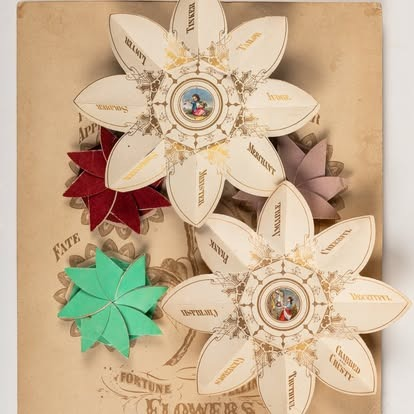
Material culture study always plays a strong role in Dublin Seminars, and 2026 is no exception. Elizabeth Eager’s presentation focuses on how women’s needlework, worked intergenerationally and often passed down matrilineally, served to link past, present, and future with every stitch. Surveying pictorial needlework alongside household sewing, personal records, and probate inventories, Eager asks a simple question with a complex answer: What kind of future did women of early New England imagine with their needlework? Similarly, Victoria Kenyon will explain how, when New England’s youngest residents made and played with specialized floral fortune-telling cards, they folded complex ideologies around empire, race, and gender into their own futures.
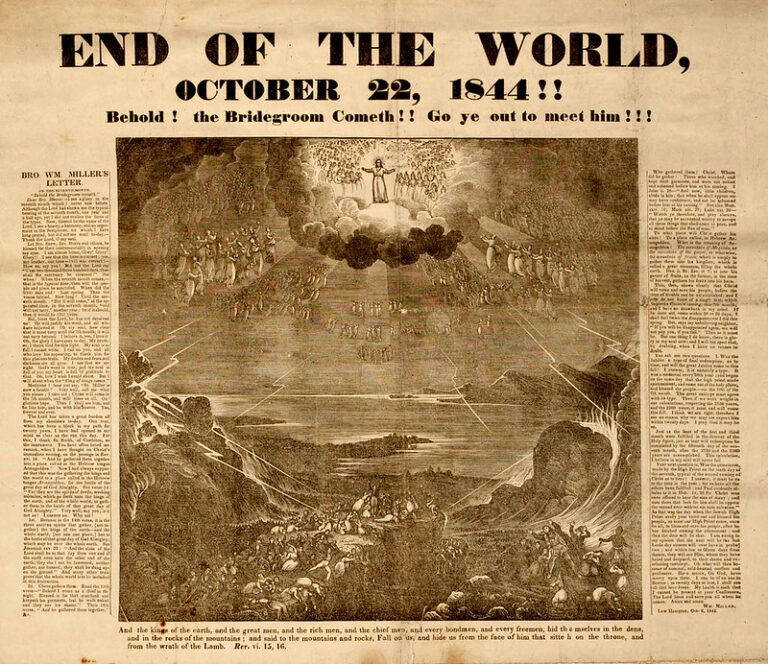
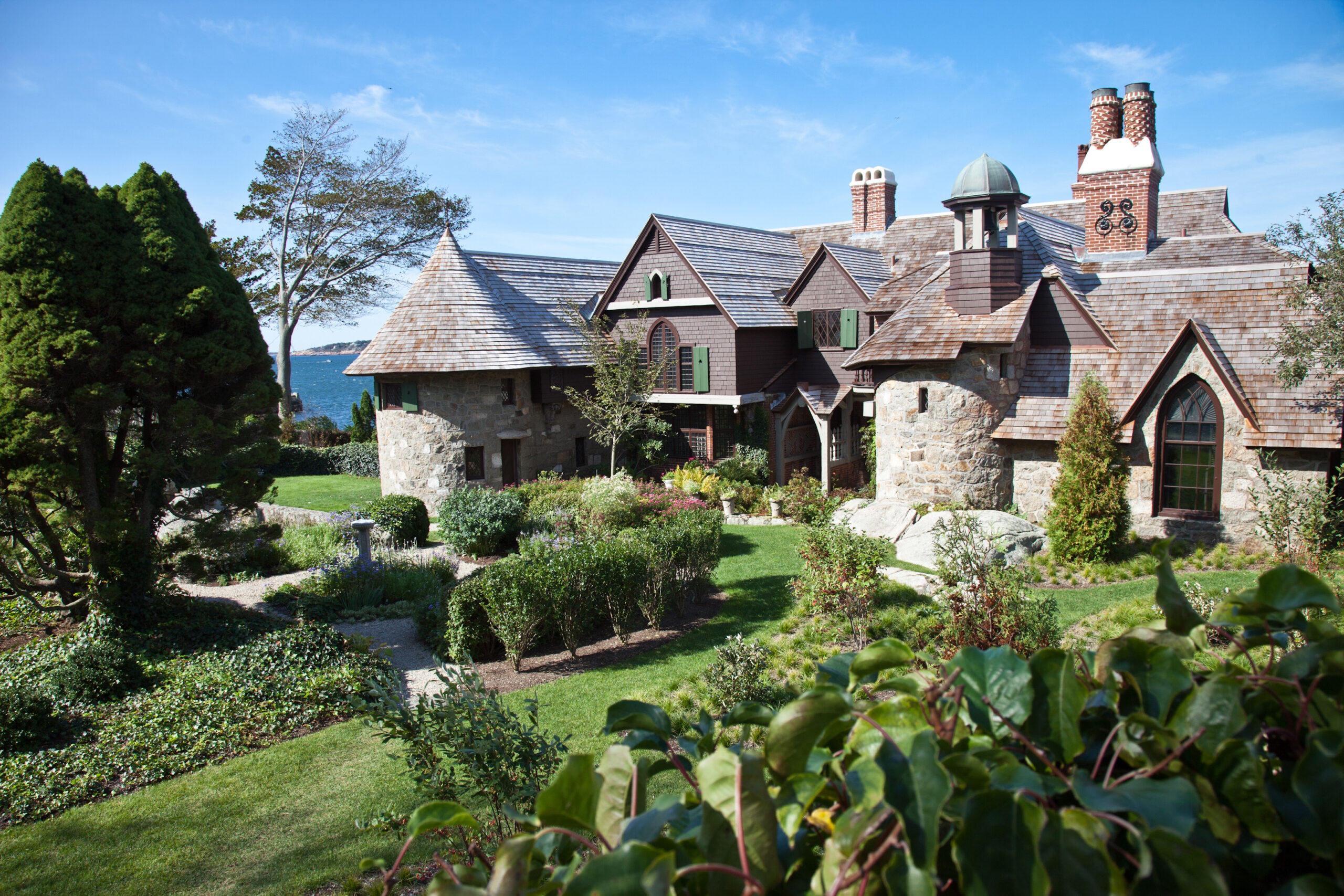
Several papers investigate social dimensions of collective life. Historic New England’s own Catherine Terelak, an interpreter at Beauport, the Sleeper-McCann House, reflects on Gloucester’s Dabsville as an intentional community of gay, single, and widowed vacationers. Carl Guarneri traces the connections between Brook Farm, Boston’s “combined households,” and the nineteenth-century origins of urban communal housing. CJ Martin will bring audiences into the mid-1840s and an understudied aspect of the movement to abolish slavery, when the abolitionist agenda of Reverend John W. Lewis combined a Baptist concern for human equality and the apocalyptic urgency of the Millerite movement.
The natural world is another lens through which New Englanders envisioned the future, and is the subject of several papers. Meghan Freeman will discuss writer and conservationist Mabel Osgood Wright, editor of the Audubon Society’s Bird Lore, among many other activities on behalf of our region’s feathered friends. And Dan McKanan will explain how nineteenth-century Bostonians imagined a forested future that repaired the region’s woodlands after two centuries of deforestation. Their activism led to the protection of thousands of acres near Boston, and to the building of roads and dams that did lasting environmental damage—a story that highlights the pitfalls of environmental prognostications in every era.
The Seminar offers opportunities to imagine pastkeepers and also futurekeepers—questions with implications for all of us today who steward collections. Curator Diana Lempel invites participants to consider: “Whose life are you finishing?” She links Silvia Mitarachi Wright’s decades-long stewardship of her Aunt Melusina Fay Peirce’s papers with Peirce’s effort to free women from domestic drudgery through the 1871 Cambridge Cooperative Housekeeping Society. Is it a burden or a privilege, Lempel urges us to wonder alongside her, being handed the unfinished work of an earlier generation of women, and their struggles to become free? Does archiving that work matter? What kind of archive brings freedom closer?
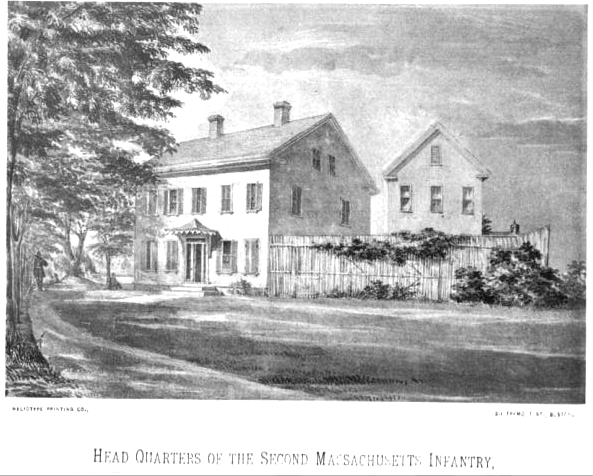
These examples are just a small sampling of what’s ahead. A particular highlight for anyone interested in the study and material culture of the region will be the roundtable on “Futurecasting” sponsored by the University of Massachusetts Public History Program and Historic Northampton, inviting reflections on the past, present, and future of New England studies. The 2026 seminar will also feature a keynote address, “The Ends of the World in Antebellum New England,” by Holly Jackson, author of American Radicals: How Nineteenth-Century Protest Shaped the Nation. Jackson will invite listeners to consider how New Englanders have contemplated the world’s end—a topic of real relevance as we today worry about the future of everything from climate change to AI.
At a time when there are fewer and fewer places where people can come together around a shared interest in the history of a region, both Historic New England and the Dublin Seminar are pleased with the many ways their long collaboration will extend into the future. A presentation by a Historic New England interpreter, alongside Historic New England’s Curator of Collections Erica Lome’s ongoing role as trustee of the Seminar, models how these two longstanding regional institutions continue to shape and interpret understandings of New England, its peoples, histories, and cultures.
Head to the Dublin Seminar’s website for a pdf of the full schedule and links to Historic Deerfield, where you can register for the conference. Presentations are offered both in-person and online, and also asynchronously, as registrants receive access to recordings for a full month following the Seminar.
Hope to see you there!
Written by Marla Miller, President, Dublin Seminar for New England Folklife
Follow the Dublin Seminar for New England Folklife on Facebook and Instagram for more information on the Seminar and to stay up to date on upcoming events.
This post is part of our Around New England series, which explores how New Englanders are building more sustainable, inclusive, and accessible communities.
Sign up to our newsletter for our latest news and events