
Cemeteries are more than burial grounds—they are open-air museums that offer invaluable insights into history. In the second installment of a two-part series on cemeteries cared for by Historic New England, discover three family burying grounds that, though not connected to our house museums, are preserved through our efforts.
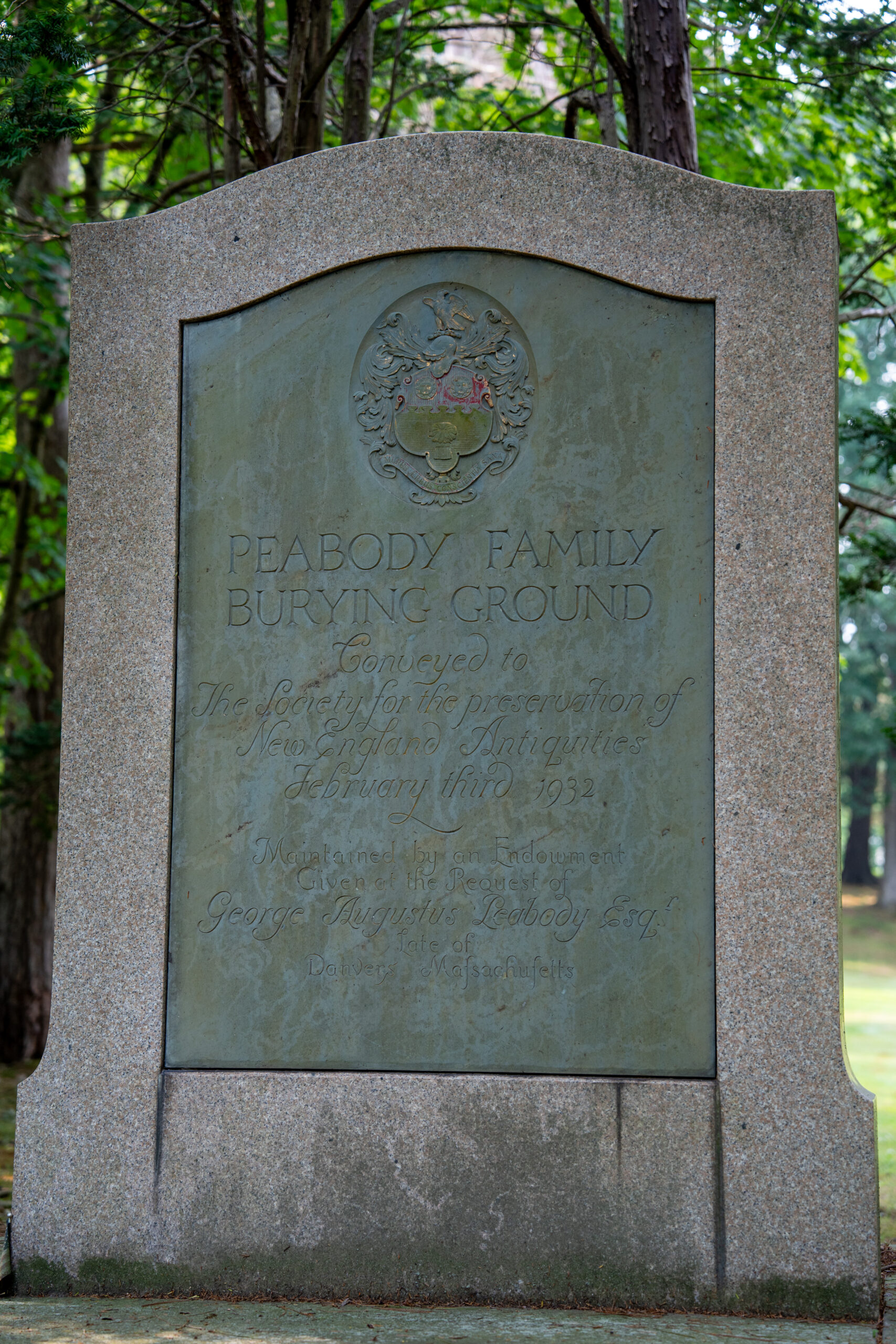
Peabody Family Burying Ground is situated on a deep rectangular site enclosed in stone walls. The cemetery contains at least thirty-two burials, all situated at the rear of the property, just past a row of red pines. The burying ground was conveyed to Historic New England, then the Society for the Preservation of New England Antiquities, in 1932. At the back of the cemetery, a distinctive headstone marks the grave of Abigill Curtis, who died in 1830 at the age of twenty-seven. The top of her headstone features a willow and urn motif, popular in the nineteenth century. The epitaph below it, however, is more unusual—a short verse, or memento mori, that reminds visitors of the inevitability of death. Of Historic New England’s six cemeteries, Curtis’s headstone holds the only example of this type of inscription. Her verse reads: “As you are now, so once was I. / Rejoicing in my bloom; / As I am now you soon must lie, / Dissolving in your tomb.” Peabody Family Burying Ground remains an active cemetery—descendants of Lieutenant Francis Peabody (1608-1697) may be interred on the property.
Visit: Peabody Family Burying Ground is open daily from dawn to dusk. It is located at 66 East Street, Middleton, MA. Parking is limited.
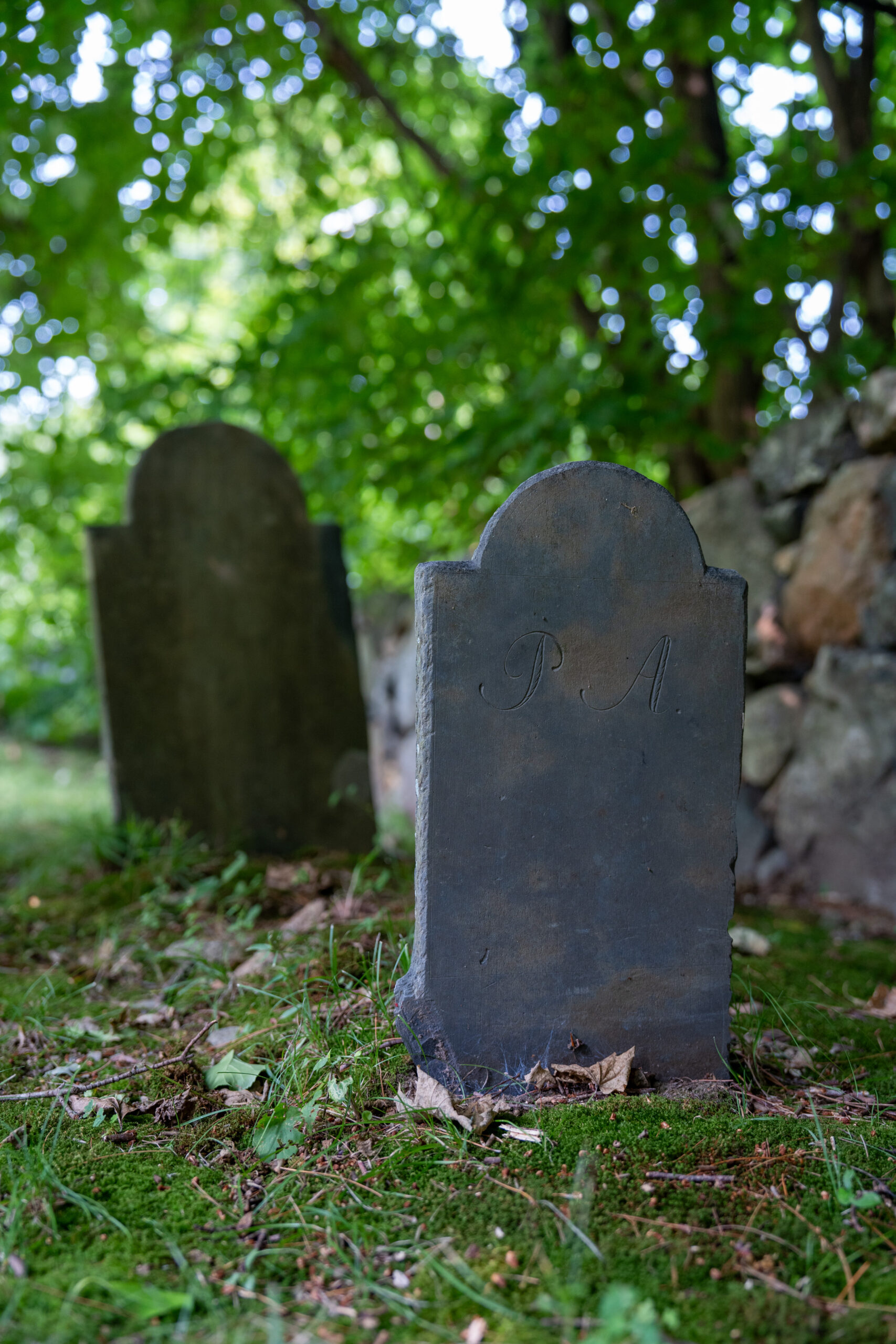
Also conveyed to the organization in 1932, Smith Family Burying Ground is located in a residential area. It is a bit unusual in that it only has three stones but nine burials. The first two stones belong to Polly Adams, who died at only four years old. Her headstone features a willow and urn motif, and her footstone simply reads “P A.”. The third stone in the burying ground is a large, rectangular one marking the resting spots of eight people, including Polly’s father, Rev. Solomon Adams, as well as Rev. Elias Smith, Katharine Peabody, Rebecah Smith, Sally Smith, Hannah Smith, Fanny Smith, and Catherine Smith. The stone serves as a reminder of life’s fragility, as Sally, Hannah, and Fanny all passed away at young ages and within just three months of one another. We still have much to learn about Smith Family Burying Ground, including how the people on the large stone are related to each other, if they are actually buried at the site or if the stone is more of a cenotaph, and if there are other burials in the cemetery.
Visit: Smith Family Burying Ground is open daily from dawn to dusk. It does not have a street address, but its coordinates are 42.59290, -71.01098. Access the burying ground from Mt. Vernon Street, southwest of the intersection of Mt. Vernon and King Streets. Street parking is available.
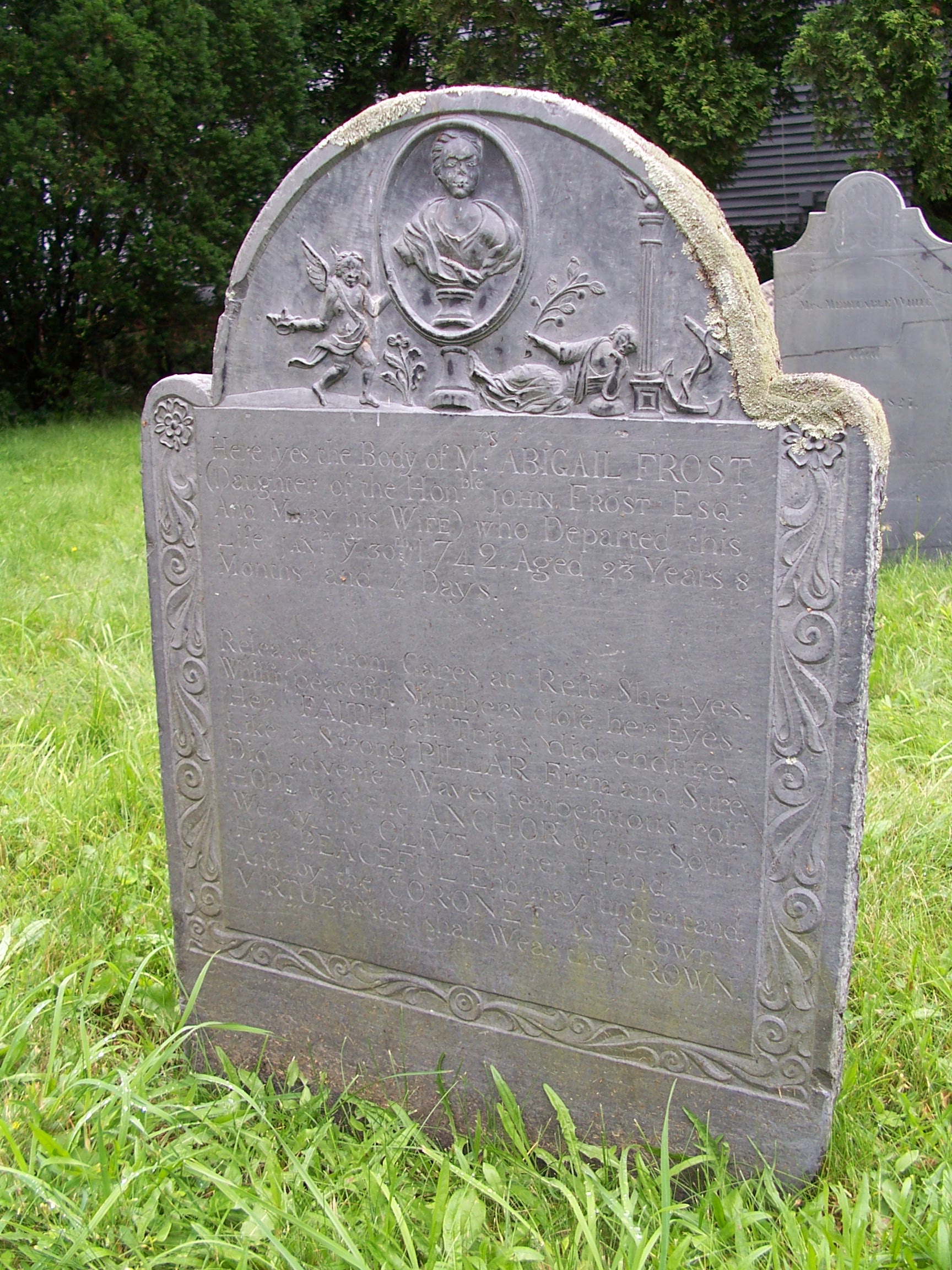
Frost Cemetery is owned by the Town of New Castle, but Historic New England holds and oversees the funds used to maintain and preserve the site. Members of the Frost and Bell families are interred there; it has thirty known burials. An exceptional headstone is the one belonging to Abigail Frost, who died at age twenty-three in 1742. Hers is the only “portrait stone” found in any of Historic New England’s cemeteries. Portrait stones, an art form that achieved some popularity in the eighteenth century, are decorative carvings that reflect human features but are not meant to be an exact likeness of the deceased. Abigail’s headstone also features smaller motifs, including a pillar, anchor, olive branch, and crown, which are referenced in her epitaph, surely meant to reflect Abigail’s short but meaningful life.
Visit: Frost Cemetery is open daily from dawn to dusk. It is located off of Main Street, across the street from New Castle Town Hall and New Castle Congregational Church. Street parking is available.
We invite you to explore our cemeteries year-round, but what better time to do so than in October? When visiting, please be mindful and respectful of the space and those who rest there.
Written by Christina Pokwatka, Preservation Project Manager, North Shore and Piscataqua
Sign up to our newsletter for our latest news and events