
April 22 will soon be upon us, marking the fifty-fifth annual Earth Day. It is a day focused on demonstrating support for environmental protection, while also considering our own environmental impacts. Many of us choose to participate in this annual celebration by considering how we can make more sustainable choices, such as recycling or composting. Others may take more direct action in our communities through community cleanup events or tree plantings. A less common, but perhaps more accessible, way to engage with Earth Day is through reading environmental literature.
Environmental literature plays an important role in translating more abstract, scientific ideas into a digestible narrative through both fiction (popularly known as “Cli-Fi”) and nonfiction. In the spirit of Earth Day, I’d like to share some environmental literature that I have enjoyed. The pieces I have selected are ones that I believe not only have the potential to help us cope with some of the harsher realities of climate change but also remind us of the beauty of the natural world and what we should aim to protect.
Robin Wall Kimmerer is a Potawatomi writer, botanist, and distinguished professor, as well as the author of the beloved book Braiding Sweetgrass (another recommendation for a wonderful piece of environmental literature). In her Minding Nature essay, “Returning the Gift,” she explores the shift of humans viewing nature as a commodity, rather than a gift, and advocates for a movement rooted in Indigenous knowledge and reciprocity. The central idea of the piece is to encourage us to reciprocate the abundance of resources that nature provides us through stewardship, rather than extraction, to ensure that those resources are available for future generations. Kimmerer’s perspective is an essential one for Earth Day, as it pushes us to consider and repair our relationship with the environment.
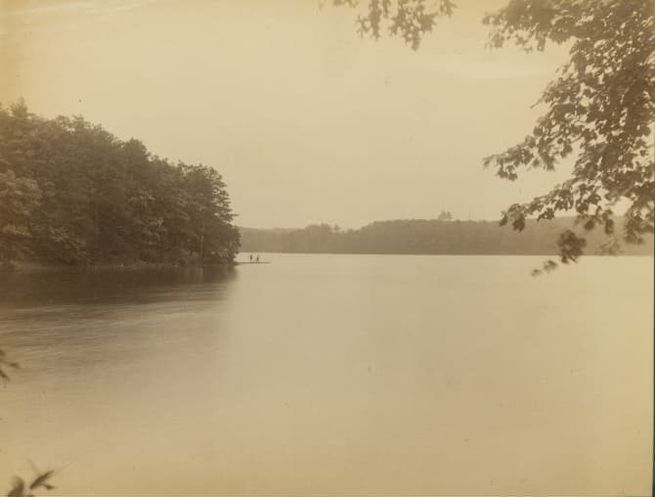
Henry David Thoreau was an American writer, philosopher, and activist, best known for his book, Walden. Walden is a foundational text of American environmentalism, as it prioritizes the importance of ecological observation and the preservation of wilderness. The memoir documents Thoreau’s experience of living in a simple cabin near Walden Pond in Concord, Massachusetts, for over two years. This piece is not only beautifully written, but it also begs readers to take actions that preserve nature, such as reducing our material consumption and exploring the natural world through observation. Thoreau additionally promotes the idea of building our emotional connection to the wilderness through his writing, a critical step in being an effective steward of the Earth.
Megan Bergman Mayhew is an author, speaker, and teacher who writes about the natural world and climate. In a piece for LitHub, “Searching for the Sacred on a Planet in Crisis,” she searches for a new way of thinking, one that merges spirituality with environmental stewardship. In doing so, she advocates for what is considered a biocentric worldview—a view that shies away from being human-centered, instead focusing on harmony and interconnectedness with nature. The essay aims to remind us of the gratitude we should feel for the planet and how we can focus on conservation and action to prioritize its preservation.
Climate and environmental literature may not be commonly considered as an “action step” when it comes to Earth Day, but it plays an essential role in how we can move forward in an uncertain world. It allows us to foster the emotional connections we have with nature, cultivating environmental awareness which will inevitably help us take action toward a healthier planet. This Earth Day, I invite you to engage with the texts I have included above or begin your own search for environmental literature that you feel drawn to.
Written by Allison Morse. Allison is Historic New England’s climate action intern and a senior at the University of New England in Biddeford, Maine. She is majoring in environmental science with minors in nutrition and public health and will be working as a stream restoration manager in Bangor, Maine, upon graduating in May.

This project is made possible in part by the Institute of Museum and Library Services.
Sign up to our newsletter for our latest news and events