
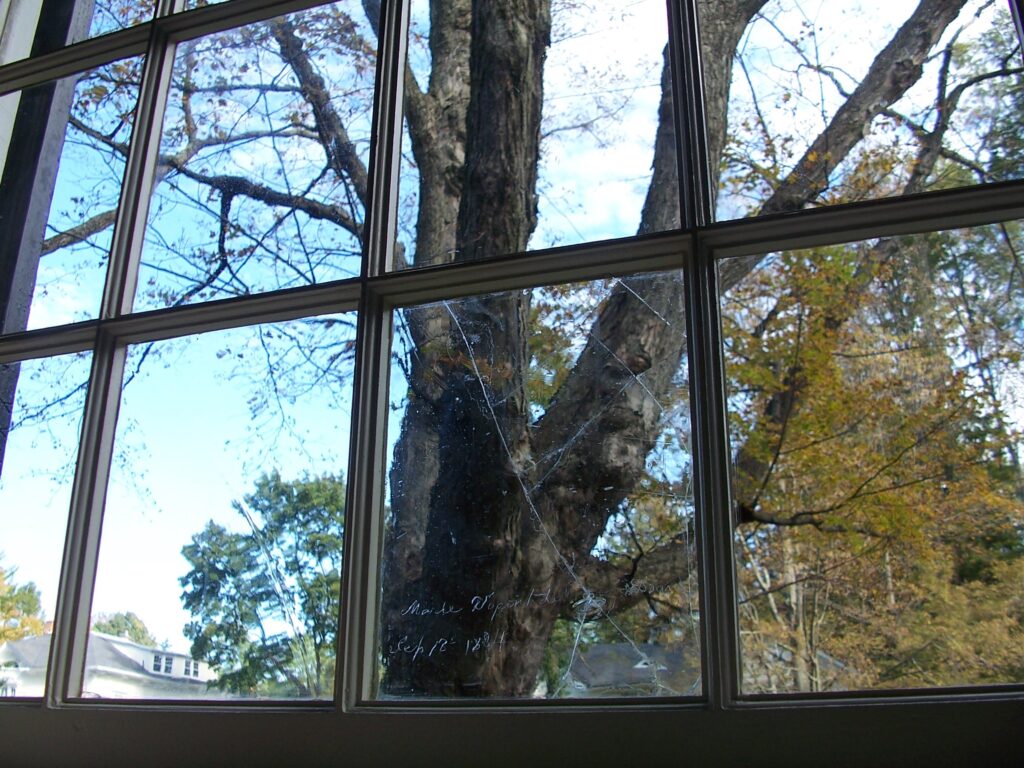
On September 8, 1886, Marie Vipont deRiviere Doane—better known to us at Historic New England as Mrs. Merwin—left a lasting impression in her family’s Federal-style summer home in Stockbridge, Massachusetts: She etched her name and date in the front window. The eight-year-old wanted to make her mark and be remembered.
You may not have visited Merwin House. It’s far away from other Historic New England properties and, compared to many of our sites, Merwin House is modest—it doesn’t have the grandeur of the Eustis Estate or creative genius Henry Davis Sleeper. Mrs. Merwin didn’t entertain any presidents or found an internationally significant design school. She was, by most measures, someone who didn’t influence the course of history and wasn’t prominent outside of her social circle. She had no children, nieces, or nephews to keep her memory alive. When her generation passed, so too would pass any interest in her story. How was she to be remembered?
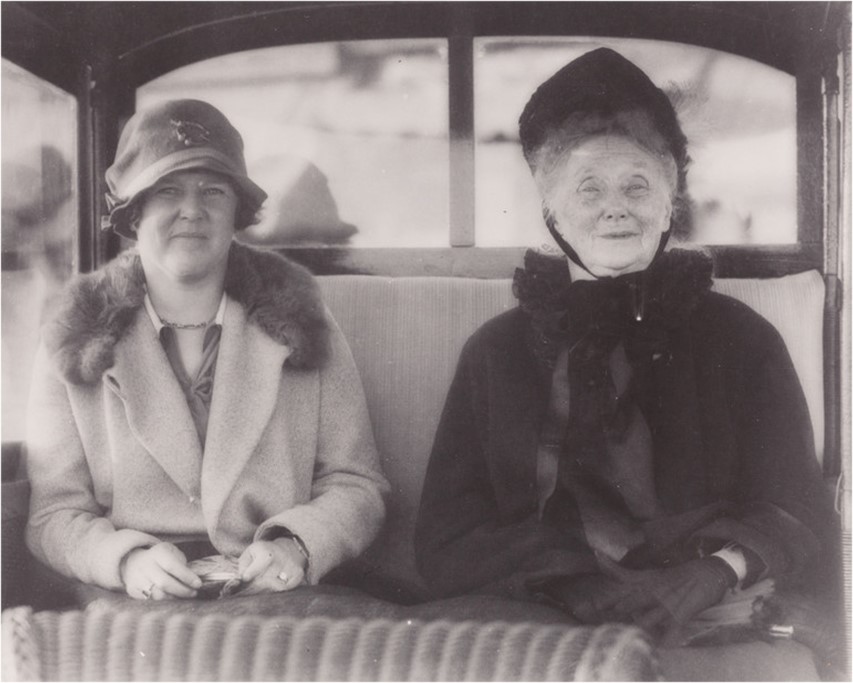
Mrs. Merwin’s answer was to leave her house and all its contents to Historic New England with the express wish that it be maintained as a museum. In accepting that gift from her, Historic New England entered into a compact and has a duty to see that she is remembered. Fortunately, the twists and turns of Mrs. Merwin’s life make her story an interesting one.
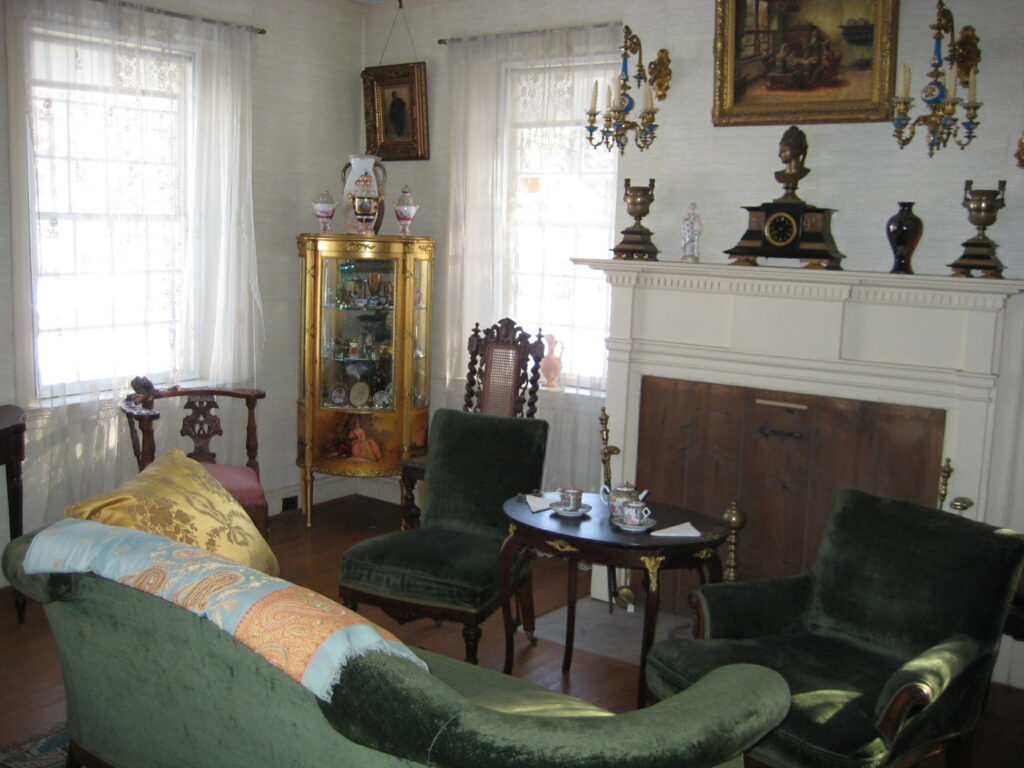
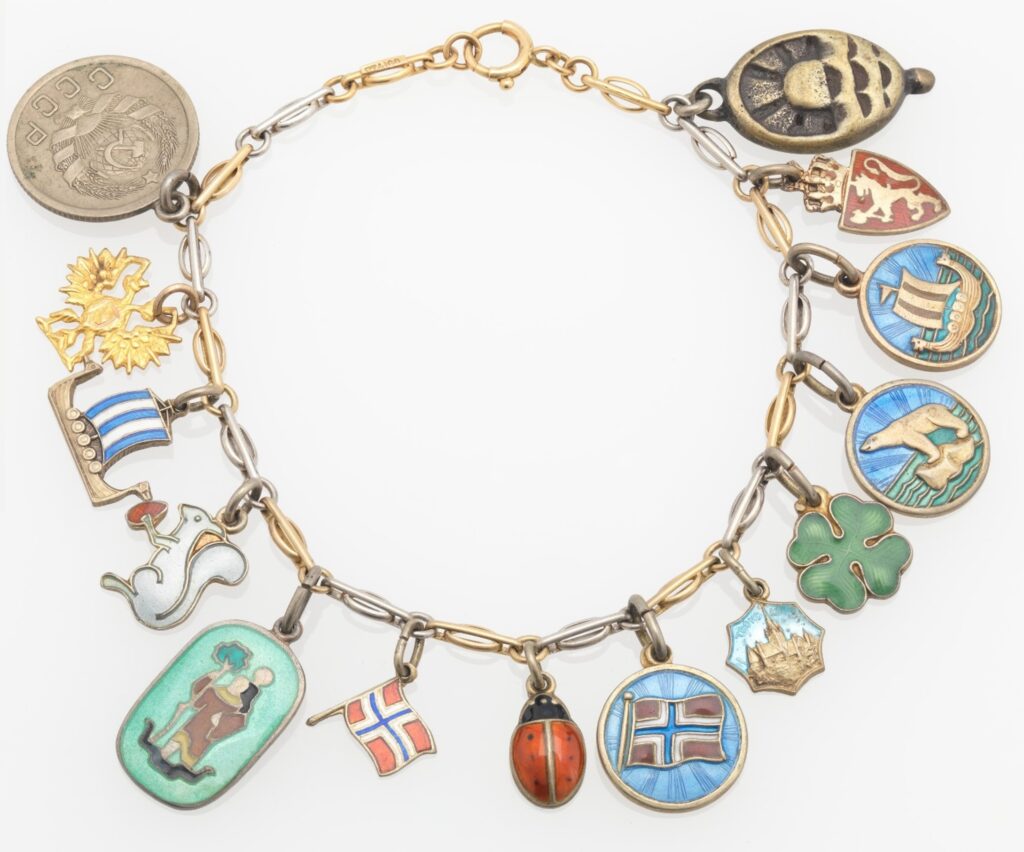
The story at Merwin House differs from those at our other sites. It’s one of an ordinary person—privileged, certainly, but of little significance in the grand scheme of things. Mrs. Merwin lived an adventurous life, but no one wrote biographies or essays about her; no scholar delves into her past. Her Stockbridge home is charming but not architecturally significant. Instead, she lives on through what she has bequeathed to us: official records and her home and its contents—the things she used to define herself. Merwin House is a wonderful example of reconstructing a life story based almost entirely on material culture: a charm bracelet, boxes of genealogical research, massive family portraits, a pastel of a beloved pet, buttons from the wedding coat of an eighteenth-century ancestor, a book on animal ghosts, sports trophies, and calling cards that include some from the Bonaparte family.
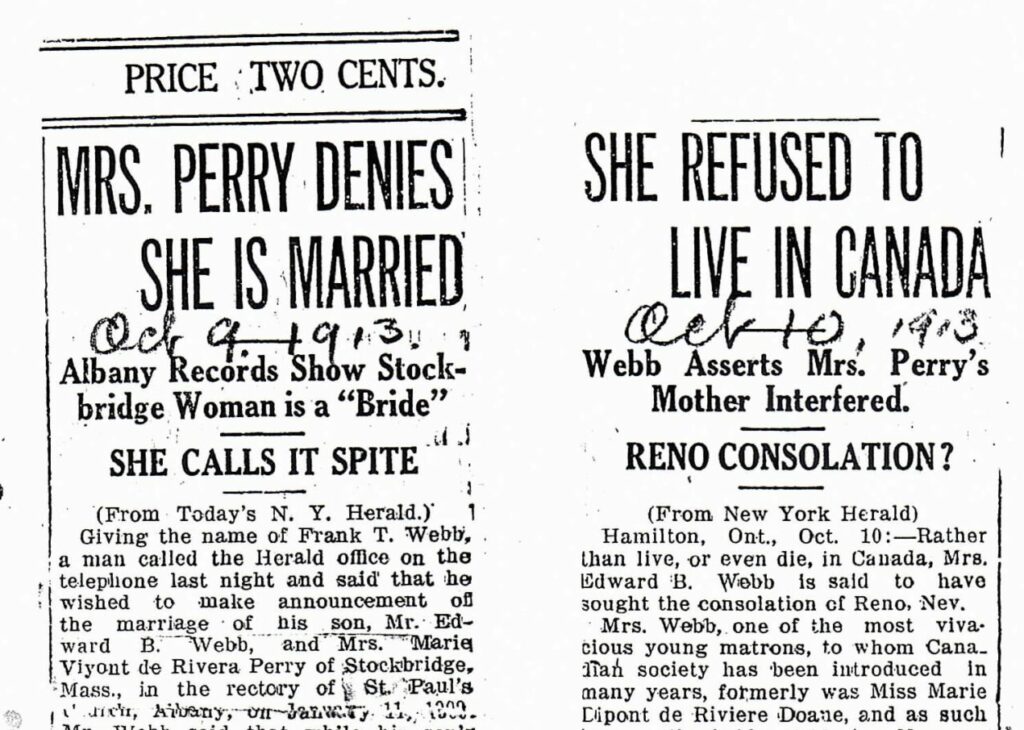
Many of those memories are poignant. Mrs. Merwin married three times. Her first marriage was in 1903 to recent Naval Academy graduate Ensign Newman Perry, who died tragically just eighteen months after their marriage in a shipboard boiler explosion. The navy honored his heroism years later by naming a destroyer after him. Some of her stories she might prefer to be forgotten. Her second marriage to Edward Webb is shrouded in secrecy. Four years after the nuptials, when the union became known to the public, Mrs. Merwin denied the marriage. When a valid certificate was produced, she was lampooned in the New York papers. Eventually, she sought a “Reno Consolation.”
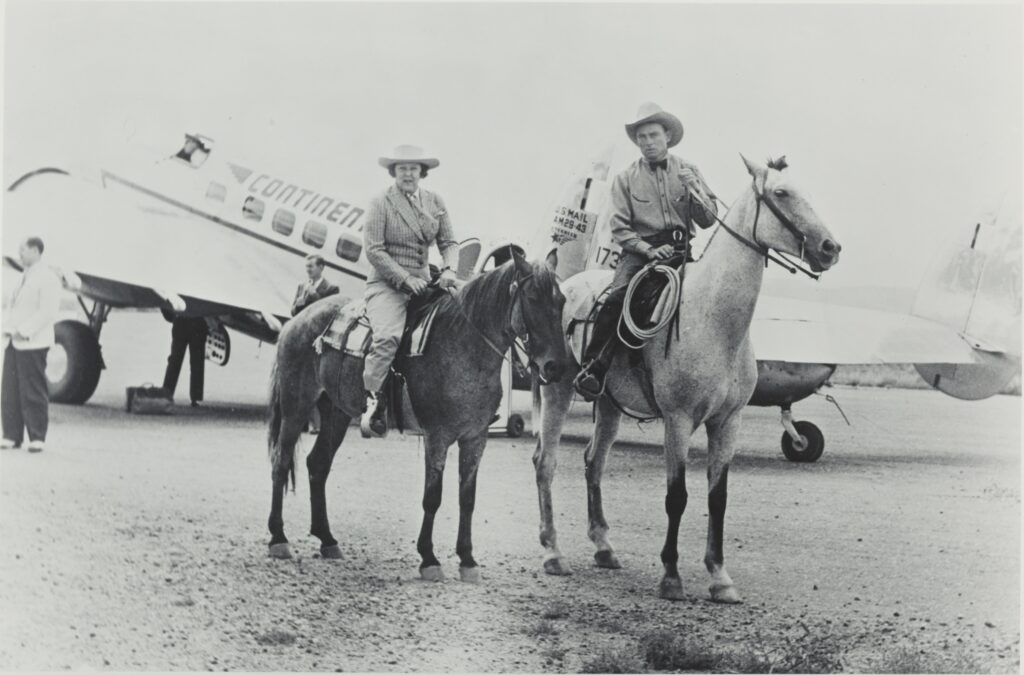
In 1923, she found and married her soulmate Edward Merwin, a Harvard man with a seat on the New York Stock Exchange who shared her interest in sports. Mrs. Merwin was an accomplished amateur athlete. At Pinehurst, in North Carolina, where she and Edward spent winters, she was Vice President of the Silver Foils, one of the first women’s golf organizations in the United States. She regularly competed against some of the best amateur golfers in that part of the country. She also excelled at tennis and equestrian events.
Little Marie Vipont deRiviere Doane began her quest to take her place in New England’s history by signing her name permanently in her family’s summer home. Every time we tell Mrs. Merwin’s story we uphold the responsibility we assumed when we accepted her bequest. Each visitor helps us meet that responsibility.
Everyone has a story to tell. Mrs. Merwin wanted hers to be told by us. Come help us maintain that pledge.
Written by Laurie Masciandaro, Merwin House Site Manager
Sign up to our newsletter for our latest news and events