
If you’ve visited our sites this summer, you may have noticed some of our lawns and meadows going au naturel. Our Sustainability Coordinator Joie Grandbois sat down with Supervising Landscape Manager Anthony DeAngelis to talk about how and why we are changing the way we care for our historic landscapes, from no-mow lawns to electrifying our fleet.
Joie Grandbois: One of Historic New England’s climate action goals is enacting operational shifts that integrate climate action into the day-to-day operations of Historic New England. Property Care has taken steps to integrate climate action into our landscaping strategies. For instance, several of our properties have meadows that we used to mow and no longer do. Can you talk about why we made that decision, how it impacts the environment, and how it supports historic New England’s climate action plan?
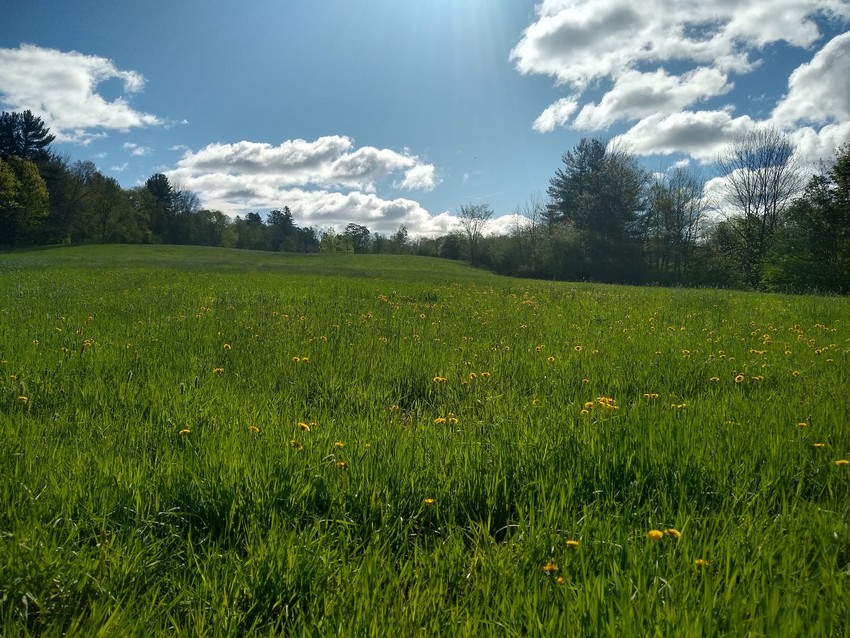
Anthony DeAngelis: There were a few meadows that we stopped mowing about fifteen years ago. It was a well-thought-out decision—we decided to save on fossil fuels, create a habitat, and it also works well with our historic interpretation. Historically, the owners of our houses would have kept the areas around their house tightly cropped, but many of our sites were working farms, so most of the outlying fields would have been hay.
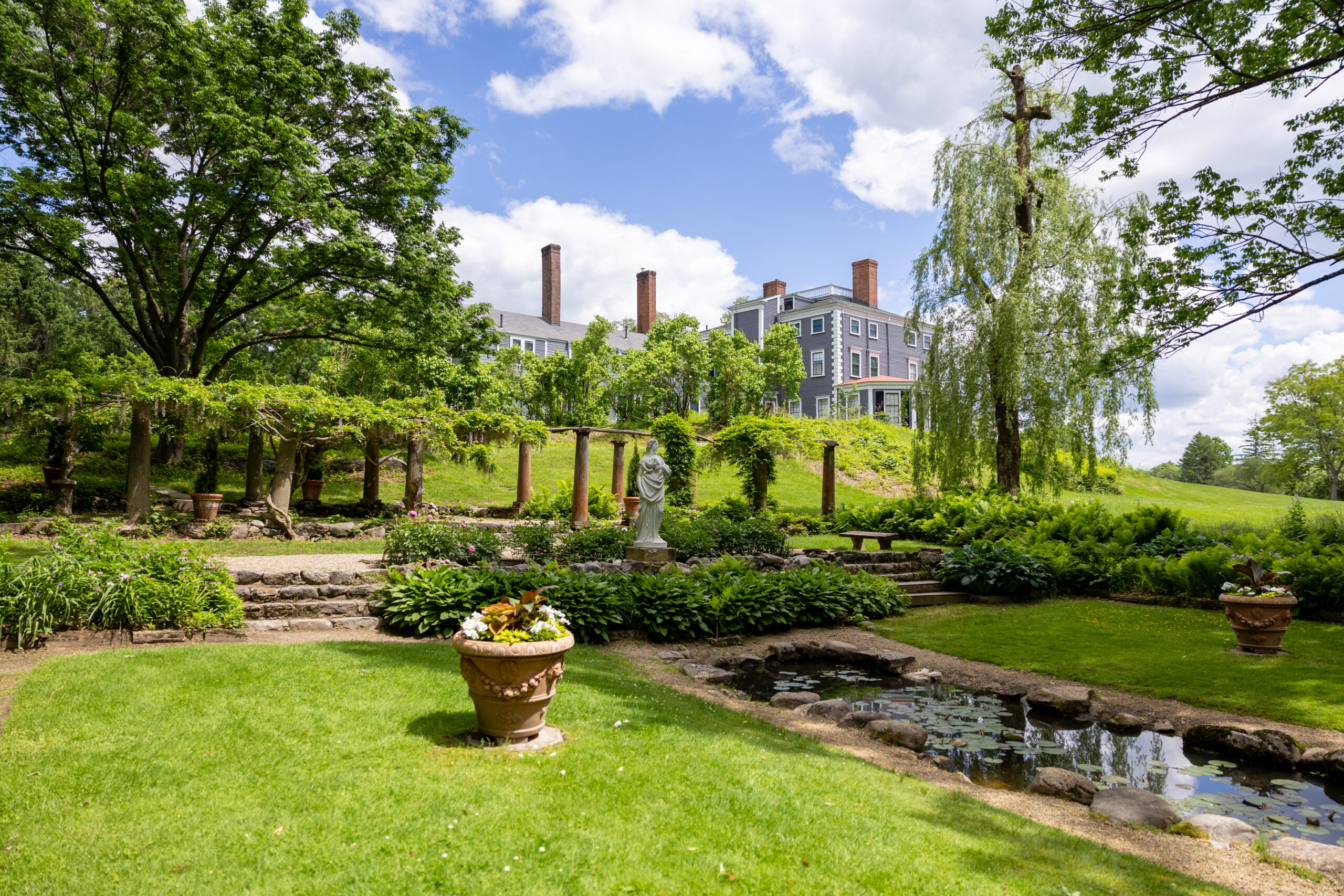
Something else we started doing recently is mowing paths through the fields to help activate the landscapes. At the Eustis Estate in Milton, Massachusetts, for example, instead of just having this wall of grass, like we used to, we have essentially a big loop and a shorter loop and people walk there every day, sometimes twice a day—some people come in the morning and again in the afternoon.
If we’re looking out across all of our landscapes, are there other changes that we’ve made and other changes that might be on the horizon in the future that you can talk about?
Years back, we stopped doing lawn chemical applications, so people see weeds in the lawn. And it’s not a neglect thing. Nobody in 1890 was going and putting broadleaf weed killer on their lawn, right? And things like clover in the lawn are good for pollinators. So we don’t really use traditional lawn chemicals. We might use lime, or if we’re seeding the lawn, we might put down some starter fertilizer, but we’re not using weed killer, we’re not using any kind of heavy lawn chemicals like that. And we’ve been doing that for a long time.
What kinds of challenges does a no-chemical, no-mow or low-mow approach pose?
Neighbors and visitors don’t always understand why we’re making the choices we do, and invasive plants and trees can be a bit of a hot-button issue. We get a lot of invasive plants, especially in the places that are closer to an urban area. Periodic field mowing is required to keep invasives in check because we don’t use chemicals and we don’t have staffing bandwidth to remove by hand. But this approach means the grasses aren’t pristine fields like well-kept agricultural fields, and then people walk through between mows and they see invasive plants and wonder why we aren’t removing them. For us, it’s a balance between frequent mowing and letting things go wild. We also have invasive trees, and we do sometimes remove those. People with good intentions see a tree being cut down and get upset, but they don’t realize it’s an invasive tree and it’s better for the habitat.
When we look at how can we be more sustainable today, often, we can look back at what people did in the past. People had their gardens in their landscapes without using Roundup—it didn’t exist. People had beautiful, aesthetically pleasing yards and meadows and they didn’t use gas powered mowers and chemicals. I think often, we can look to the past to find out what we can do now. And what’s wonderful is sometimes it even makes it easier for us.
Absolutely. Another thing that we’re doing is using battery-operated small equipment. At the Eustis Estate, we do all the trimming with battery powered equipment. We even have some battery chainsaws. We do still have gas powered ones—the drawback with a chainsaw is when there’s storm damage, if the power’s out, you can’t charge the battery, and you have trees down that you have to take care of.
We’re also starting to electrify our fleet. We’re getting our first battery powered riding mower this year. One of the benefits of that is you don’t even have motor oil. Lawnmowers have such a dirty engine. I’ve been landscaping since college, and I would get the exhaust fumes in my clothing and I would smell fumes on me at the end of the day. You just smell like exhaust, and it’s in your lungs. Besides the fossil fuels, you don’t have to drain the oil out of the engine and it’s just more environmentally friendly. They’re super-expensive, around $27,000. Gas ones of the same size are around half the price. So, if somebody reading this wants to write us a check for more battery-powered mowers, we’ll take it!
What’s your best try-this-at-home tip for readers—something Historic New England is doing at our properties that everyone can do to make an individual impact, too?
I would switch to battery-powered equipment—that’s something easy a homeowner could do! There’s no reason you can’t do a battery mower in a homeowner’s yard, and it’s much cheaper than a commercial riding mower like we’re buying. If your yard is small enough, you could just use one of those reel mowers, the old-fashioned push mower with the reel that spins. You would completely eliminate any use for oil or any use for the gasoline burning. Plus, the equipment’s quieter. If your lawnmower wears out, the next time you buy a new one just get a battery one—the technology is only going get better as time goes on.
For expert advice and best practices related to sustainably caring for historic landscapes from our Property Care team, check out their white papers on Landscape Preservation & Maintenance.
Sign up to our newsletter for our latest news and events