
Historic New England’s Nickels-Sortwell House in Wiscasset, Maine, is a National Historic Landmark and one of the region’s finest Federal-style houses. A shipping magnate’s mansion that became a hotel, and a hotel that became an early twentieth-century summer home, its story mirrors social and economic changes in coastal Maine across two centuries. Visitors navigate these transitions—literally and figuratively—as they walk through the house, ending their guided tour in what is by and large the house’s most loved room: the solarium.
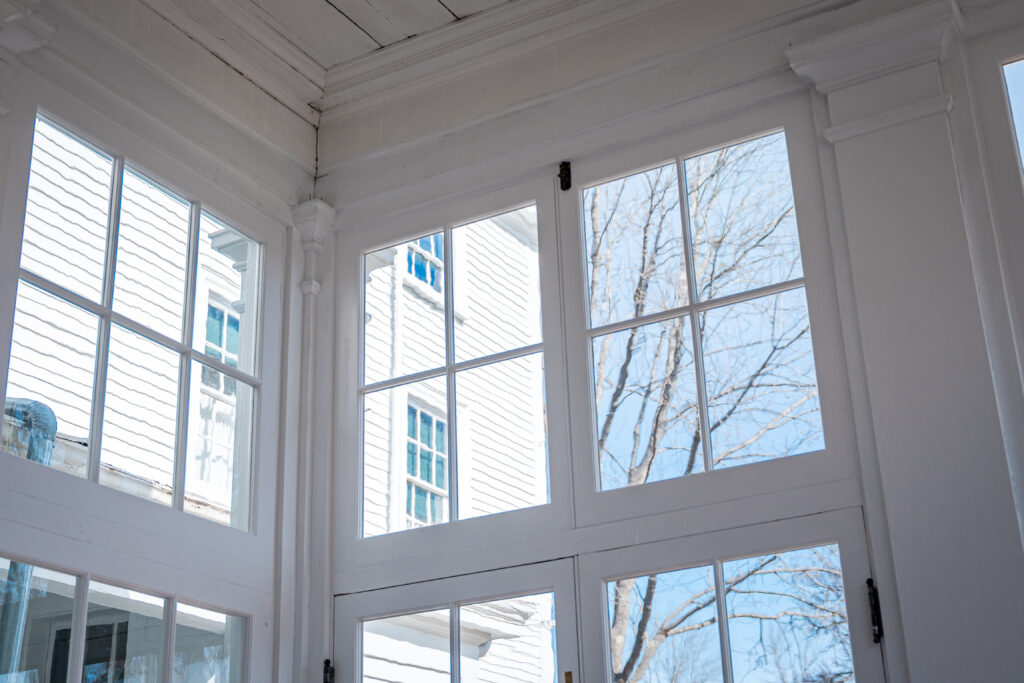
The solarium is a ca. 1917 addition to the 1807 house by the Sortwell family. Visitors relish this airy, light-filled, and welcoming space, which immerses them in the feeling of an early twentieth-century summer in Wiscasset. It includes two large doors, three small doors, and three large, fixed windows, all with windows above, and all designed to be opened to the sunken garden.
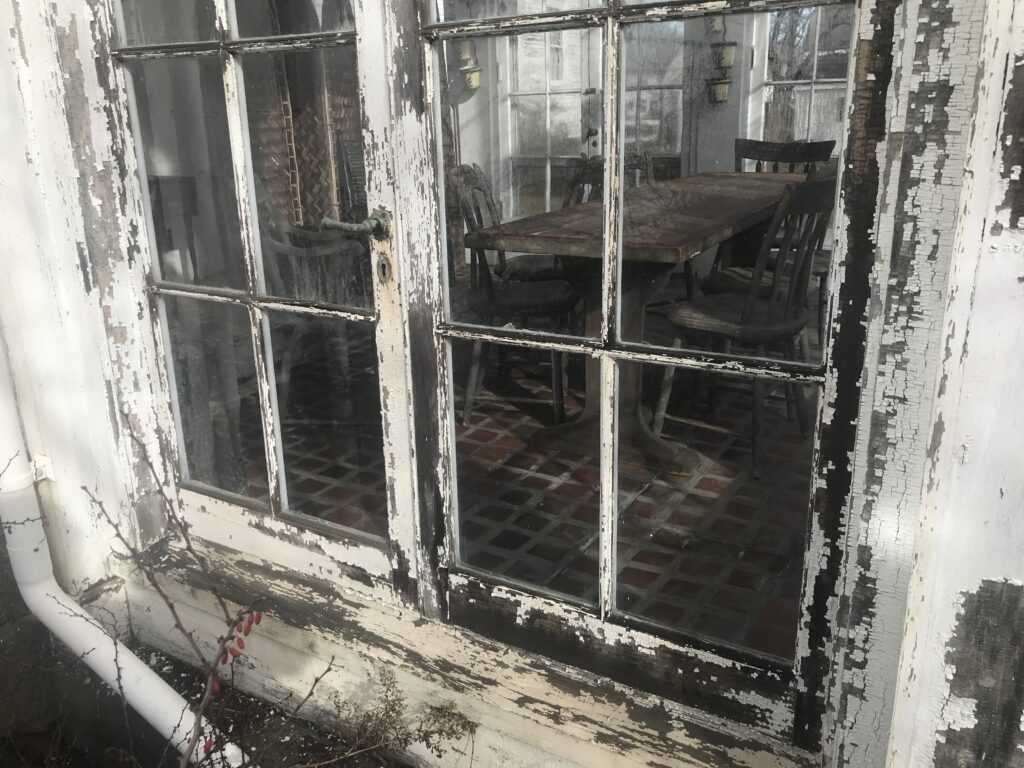
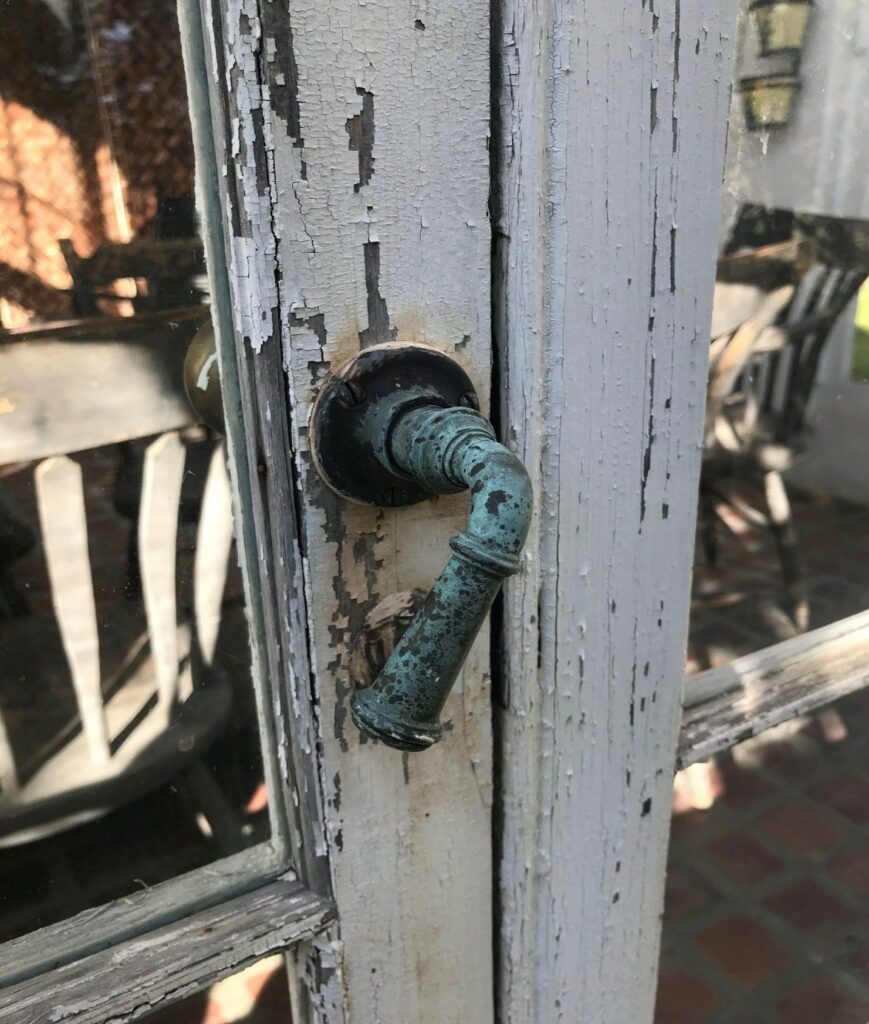
Historic New England has spent the past two winters working to restore this treasured space, which was in great need of carpentry repairs, reglazing, and restoration to broken and deteriorated hardware. We engaged a contractor specializing in historic windows to complete the project in two phases. The doors, windows, and hardware were removed to the contractor’s workshop, where the features were cleaned of many layers of old paint, repaired, and made fully operational. The last of the restored doors and windows were reinstalled this spring.
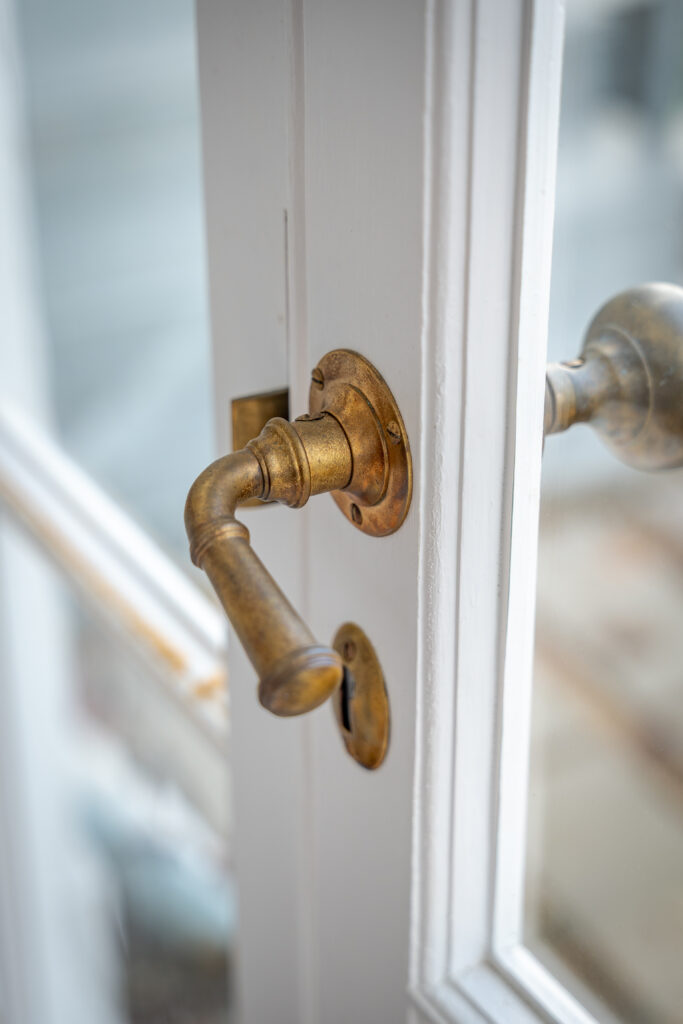
These improvements weren’t only cosmetic—the restoration also aligned with Historic New England’s institution-wide resiliency efforts. The project helped to secure a vulnerable section of the house’s exterior envelope which, due to the condition of the windows and doors, had been experiencing issues of moisture infiltration and condensation. Restoring the windows to full operability will also allow us to vent the solarium in summer—rather than trap the heat—which will facilitate air flow and moderate temperatures within the house.
Completing this project has had an immediate impact on visitors’ enjoyment of this beloved space, allowing unity between garden and house as the Sortwells intended. But our delight with the outcome is bittersweet. The project was made possible by funding from the Mildred H. McEvoy Foundation through the support of George H. McEvoy, a benefactor of Nickels-Sortwell House for more than thirty years. Through his generosity and passion for preservation, George had an immeasurable impact on the Boothbay and Wiscasset area and enabled many major initiatives at Nickels-Sortwell House. George passed away last month at age eighty-six, leaving a legacy of tireless commitment to his community that will never be forgotten.
Peggy Konitzky, Historic New England’s Site Manager for Midcoast Maine, remembered George as a dear friend to the Maine historic preservation and maritime communities: “A former teacher, lifelong ocean sailor, and historic preservationist, George was passionate about saving Maine’s maritime history. In 1964, he created the Boothbay Railway Village Museum, saving and relocating historic structures and artifacts to the park to share with generations to come. A trustee emeritus of Maine Maritime Museum, George saved the Ram Island Lighthouse as well as several historic wooden schooners. He was a wonderful storyteller and devoted to family, friends, and his community. While flags in Boothbay flew at half-mast, the Boothbay Fire Department said it best with a sign that simply said, ‘Thank you, George.’”
Written by Katherine Pomplun, Institutional Giving Officer
Restoration of the Nickels-Sortwell House solarium was generously supported by grants from the Mildred H. McEvoy Foundation.
Sign up to our newsletter for our latest news and events