1878-1917
Collection is filed within the general photographic collection (PC001)
GUSN-171274
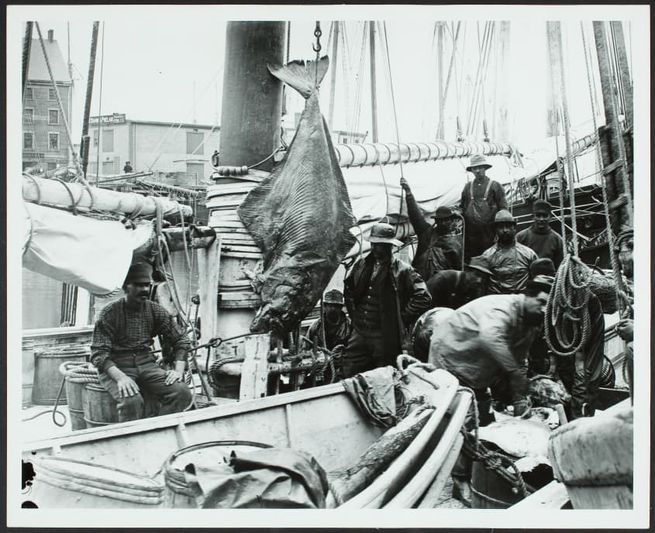
The Baldwin Coolidge Photographic Collection is comprised of over 2,000 original negatives, copy prints of the negatives, and a small number of original prints. 2,276 of the negatives were digitized. Coolidge developed his prints on delicately toned Aristo paper. Coolidge was active as a professional photographer from the late 1870s until 1917, which time period is congruent with the chronological coverage of the collection. Among the many types of images Coolidge captured, he focused his lens on life in Oak Bluffs, Nantucket, and Woods Hole, Massachusetts, the streets and buildings of Boston, pastoral and marine views in Windham, New Hampshire and Biddeford, Maine, and vessels of all kinds. Boston, Massachusetts is the best represented locality in the collection. Coolidge photographed the Public Garden, Boston Common, T. Wharf, Trinity Church, Boston Public Library, Salada Tea Building under construction, Christian Science Mother Church, and many other streets and buildings. Coolidge's emphasis tends to be on the street or building as a whole, rather than on specific details. To this extent, his photographs are an excellent record of the urban scene at the turn of the twentieth century, often including pedestrians and other signs of activity usually absent from more rigorously architectural views.He also maintained a summer studio on Martha's Vineyard, Massachusetts, the base from which he made several hundred views of Nantucket, Falmouth, and other Cape Cod communities. He took a series of over fifty images of the staff, students, and facilities of the Marine Biological Laboratory at Wood's Hole.Coolidge's work includes studies of various public libraries by Henry Hobson Richardson; the life-saving stations at Hull, Massachusetts and Biddeford, Maine; farmhouses and scenery in Windham, New Hampshire; and scenes along the Cog Railway and Summit House on Mount Washington, New Hampshire. In other photographs, he focused on working ships, especially fishing schooners. He also captured various photographs related to early American and colonial history.
Source: Guide to the Library and Archives, 7.
ships
buildings (structures)
exterior views
public libraries (buildings)
churches (buildings)
fishing schooners
life-saving stations
farmhouses
aristo paper
photographers
religious buildings
black-and-white negatives
black-and-white prints (photographs)
dry collodion negatives
ca. 2,000 photographic prints and 2,276 photographic negatives : black-and-white
ca. 2,000 photographic negatives : black-and-white
PC022
Baldwin Coolidge Photographic Collection, circa 1878-1917
1917
PC022
Gift
Gift of Baldwin Coolidge, 1917
Boston (Suffolk county, Massachusetts)
Martha's Vineyard (Dukes county, Massachusetts) [island]
Nantucket Island (Nantucket county, Massachusetts) [island]
Cape Cod (Barnstable county, Massachusetts) [peninsula]
Woods Hole (Barnstable county, Massachusetts)
Hull (Plymouth County, Massachusetts)
Biddeford (York county, Maine)
Windham (Rockingham county, New Hampshire)
Mount Washington (Coos county, New Hampshire) [mountain]
Back Bay (Boston, Suffolk county, Massachusetts) [neighborhood]
Coolidge, Baldwin, 1845-1928 (Photographer)
black-and-white negatives
black-and-white prints (photographs)
dry collodion negatives
Richardson, H. H. (Henry Hobson), 1838-1886
Marine Biological Laboratory (Woods Hole, Mass.)
Mount Washington Cog Railway
Public Garden (park)
Architectural photography
Collection
Collection is filed within the general photographic collection (PC001)
Baldwin Coolidge was photographer who documented New England architecture, landscapes, artwork and occasionally human subjects during the late nineteenth and early twentieth centuries. Coolidge was born in Woburn, Massachusetts in July 1845. His parents were Benjamin Coolidge and Mary (Manning) Coolidge. During the Civil war, he served in Company K of the Sixth Massachusetts Regiment of the Light Artillery and was discharged in 1866. He married Lucy Ann Plumer in February 1866 and had a daughter, Marie Coolidge (Mrs. Joseph Henry).
Prior to becoming a photographer, Coolidge worked as an engineer and was the first city engineer of Lawrence, Massachusetts. In 1878 he opened his photography studio at 147 Tremont Street, Boston, Massachusetts. He also had a summer home and studio in Cottage City (Oak Bluffs) in Marthas Vineyard, Massachusetts. In 1904 he opened his final studio was located at 410A Boylston Street, Boston, Massachusetts. Most of his work was commissioned by various organizations and individuals. He was a staff photographer for the Museum of Fine Arts, Boston for thirty years. Although most of his work was commissioned, he also photographed for his own artistic endeavors. During his prolific career, Coolidge made approximately 20,000 negatives.
Coolidge lived in New England his whole life but in 1917 he moved to his daughters homes in Pasadena, California due to his failing health. Resuming his artistic vocations, Coolidge sketched and painted in watercolors. He died in 1928 in California and his ashes were returned to Woburn, Massachusetts.
Source: Reichlin, Ellie. "Double Exposure and William Sumner Appleton", Old-Time New England 69, no. 255 (Winter/Spring 1979): 34-41.
Reichlin, Ellie. "Double Exposure and William Sumner Appleton", Old-Time New England 69, no. 255 (Winter/Spring 1979): 34-41.
The photographs of ships are arranged in the Subjects file under Marine transportation and are in alphabetical order by vessel name.
Historic New England is committed to implementing reparative language description for existing collections and creating respectful and inclusive language description for new collections. If you encounter language in Historic England's Collections Access Portal that is harmful or offensive, or you find materials that would benefit from a content warning, please contact [email protected].
Sign up to our newsletter for our latest news and events

 Loading...