
My aunt recently texted our family a picture of my mother and her siblings dressed in eighteenth-century costumes, preparing to celebrate the United States Bicentennial in 1976. Soon, our group chat was flooded with snapshots taken from fading albums, depicting family members watching parades, visiting museums, and participating in other patriotic commemorations. I thought of my own pictures taken while attending America 250 events over the past year. I started wondering: How has photography played a role in milestone national anniversaries?
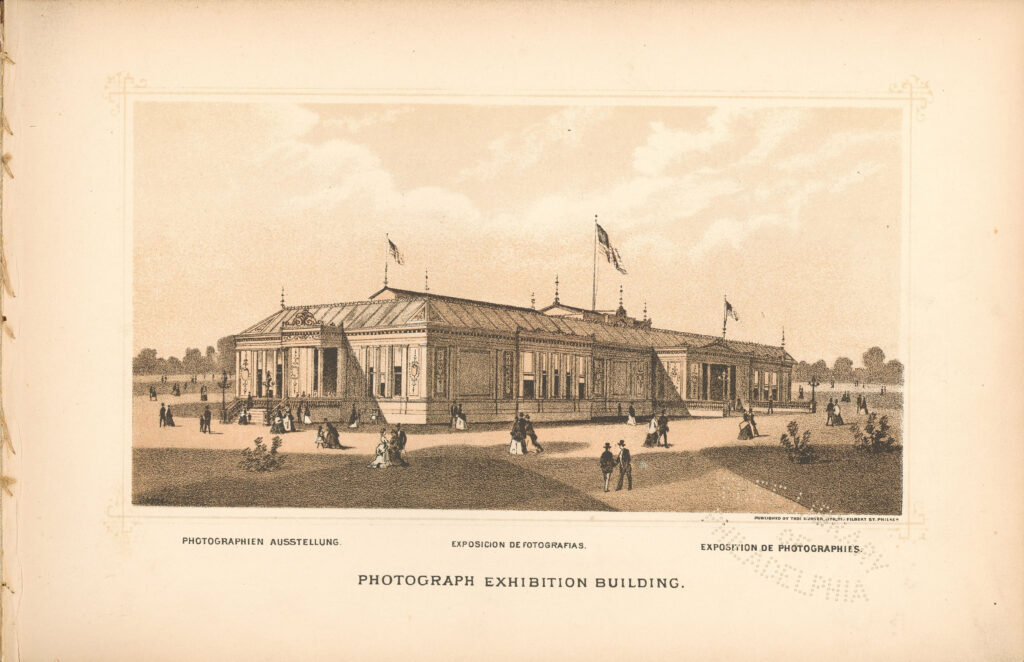
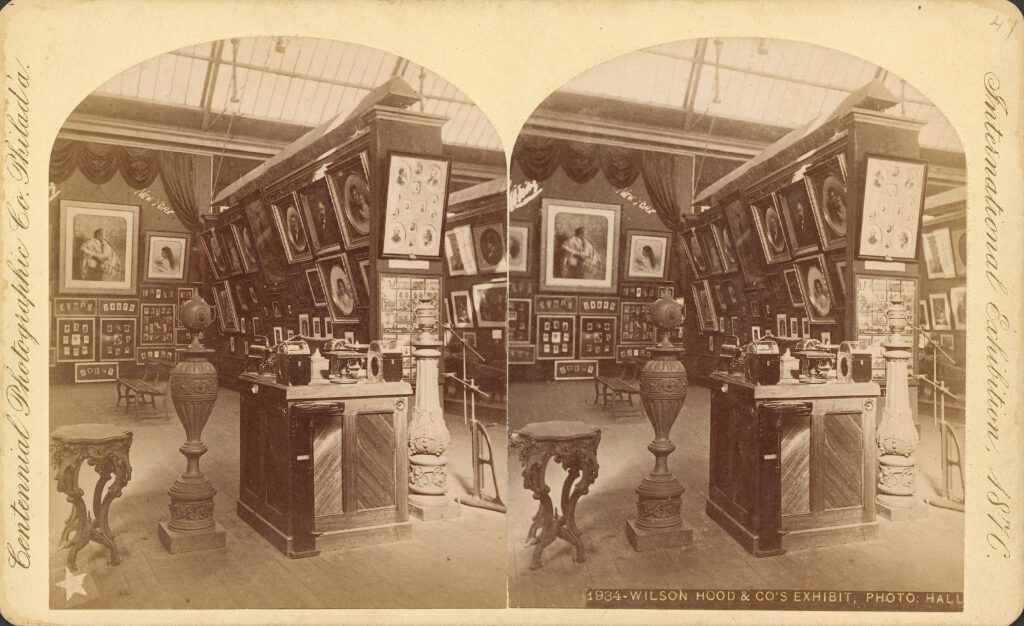
Photography, while no longer a complete novelty, remained a relatively new technology at the time of the United States Centennial in 1876. At the Centennial International Exhibition in Philadelphia (the first world’s fair held in the United States), photography and photographic equipment were given their own building as an annex of the larger Art Gallery building (now Memorial Hall). Here, photographers displayed their work alongside their cameras, all while spotlighting the latest technological advances in the field.
The centennial coincided with the rise of mass-produced photography, particularly stereoviews, which became popular among middle-class Americans as collectibles and travel souvenirs. Images depicting exotic locations or exciting events could be mailed across the country, similar to how we use postcards today. The Centennial Exhibition’s commissioners were determined to capitalize on this trend and issued an exclusive photographic license to the Centennial Photographic Company. Over the course of six months, the Centennial Photographic Company produced thousands of stereoviews documenting displays, special events, and notable attendees. The images helped define how millions of Americans remembered the Exhibition and the nation’s centennial for decades to come.
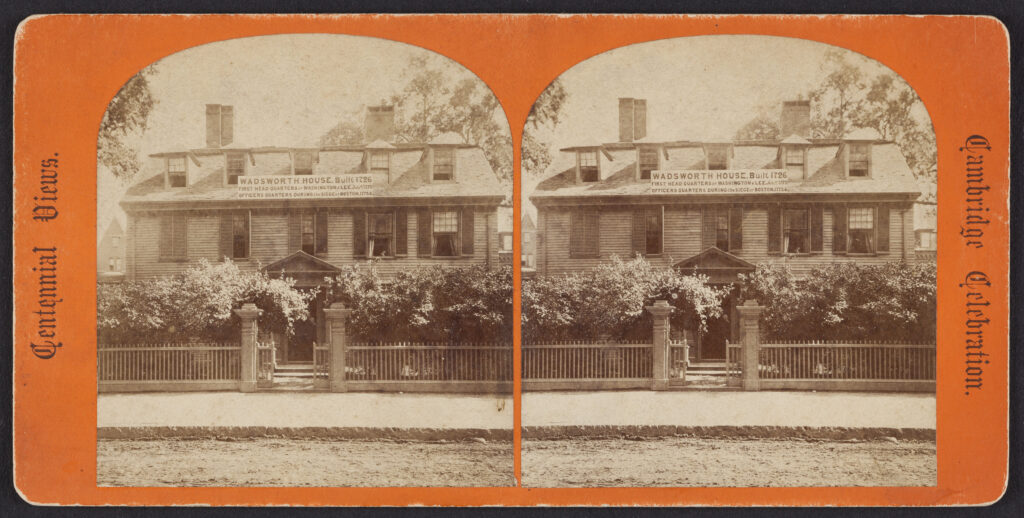
In New England, Cambridge-based landscape photographer Thomas Lewis (1845-1901) published a series of “Centennial Views” documenting historic landmarks around Massachusetts related to the American Revolution. These stereoviews captured the sites themselves as well as celebratory events taking place throughout 1875 and 1876 commemorating America’s 100th birthday.
As it had during the 1876 Centennial, photography played a prominent role in the celebrations surrounding the Bicentennial in 1976. On a national scale, the National Endowment of the Arts funded the Bicentennial Photography Surveys. A series of regionally focused photo-documentation projects, the surveys resulted in thousands of images recording the nation during its important anniversary. A selection of the project’s images will be on view in the exhibition Much Here Is Beautiful: Photography Surveys of the U.S. Bicentennial at the Smithsonian American Art Museum from September 18, 2026, to April 18, 2027.
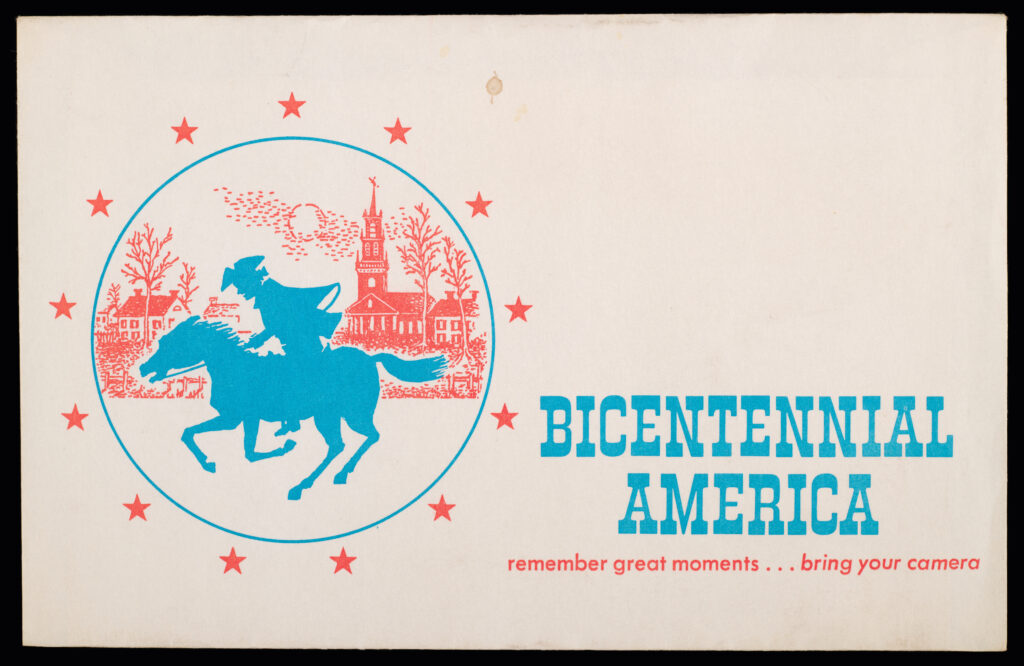
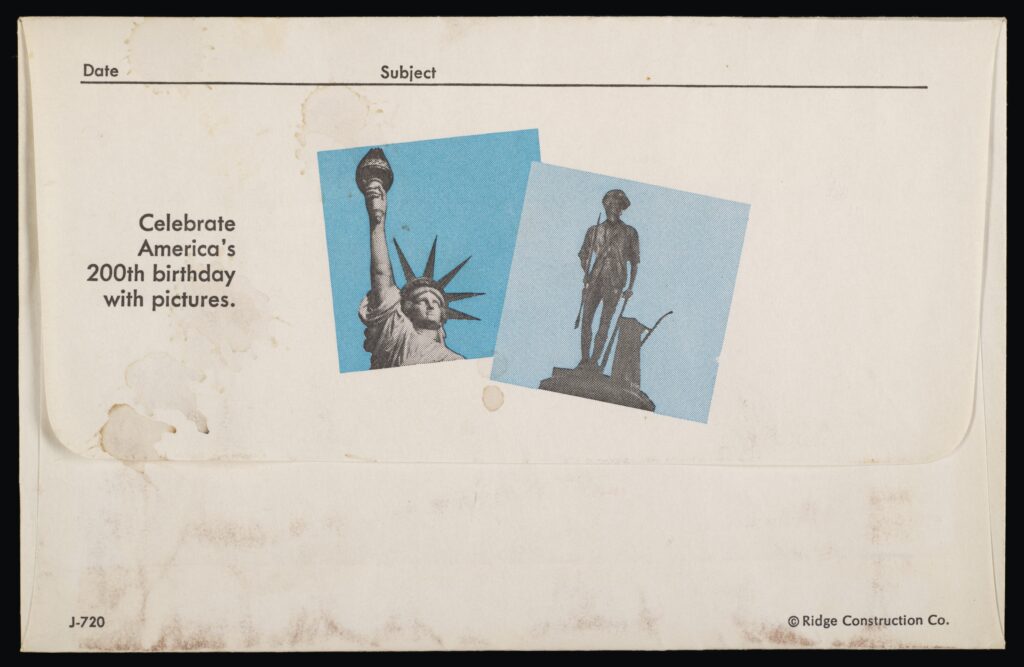
Parallel to government-supported efforts, the widespread accessibility of snapshot photography by the 1970s meant that Americans could document the nation’s 200th birthday however they wished. The photo envelope shown here is part of a collection of Bicentennial materials collected by Jane C. and Richard C. Nylander. For such a mundane item, the envelope is packed with patriotic imagery, bearing an image of Paul Revere’s midnight ride on the front and the Statue of Liberty alongside Daniel Chester French’s Minute Man statue on the back. The envelope encourages customers to take pictures of the celebrations as a way to “remember great moments,” explicitly connecting amateur photography to the larger national interest in exploring moments in America’s past—the idea that by photographing the Bicentennial, you, too, could be a part of American history.
With 2026 marking the United States Semiquincentennial, Americans are turning to photography once again to document the nation’s 250th birthday. Echoing the sentiment of the Bicentennial Photography Surveys, photographic competitions have been held or are currently being held by organizations across the country, including the American Battlefield Trust and Defenders of Wildlife. In addition to regional and local projects, many states held competitions to determine photographs to include in the official America 250 time capsule. Are you photographing scenes of this year’s commemorations? What moments do you want to capture?
Written by Sophia Cos, Archivist
Sign up to our newsletter for our latest news and events