
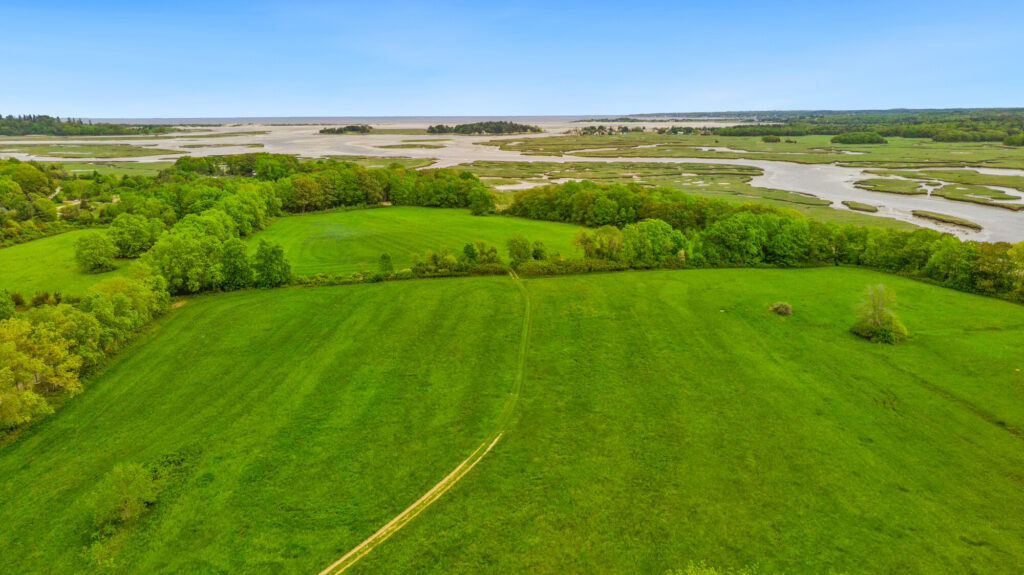
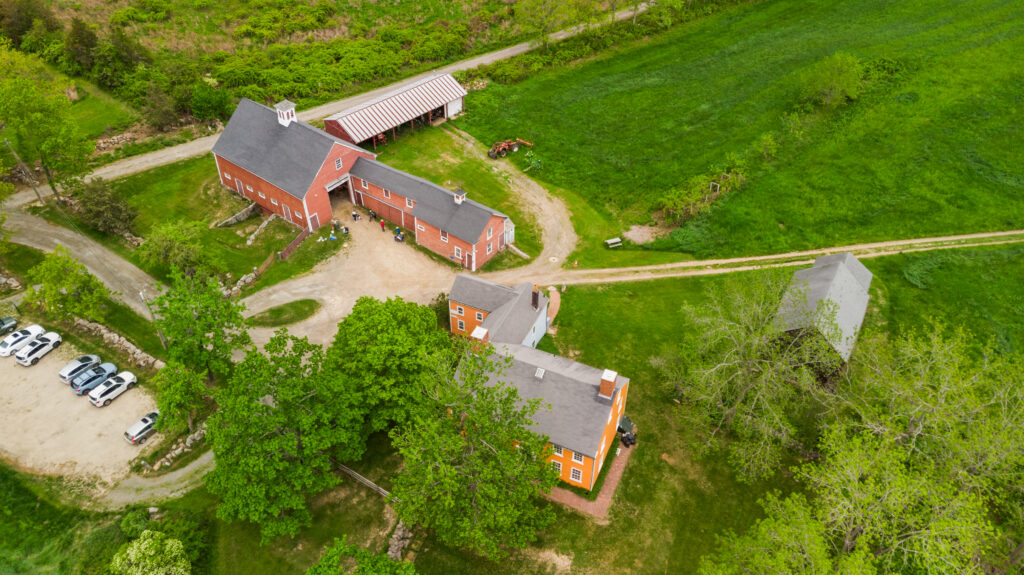
Cogswell’s Grant is a 165-acre property with a four-hundred-year history of European-style farming. Today, it remains one of the few protected stretches of open land along the Essex River. Back in 2019, when local birders became concerned that the property’s historical land management and hay farming practices were in conflict with conservation of nesting grassland birds, Historic New England sought to understand how it could continue to maintain the open field habitat these species depend on, while also protecting individual nesting pairs and their offspring. The organization found itself in need of technical support to maintain an effective balance to continue harvesting hay while supporting nesting birds.
In contrast to the majority of local wildlife, grassland-nesting bird species thrived during the nineteenth century when the majority of New England existed as a vast agricultural landscape. As the average American transitioned away from a farming lifestyle throughout the twentieth century, forest ecosystems began to reclaim dominance over these open fields. Dependent on these large, contiguous patches of grassy meadow habitat to establish their breeding territories, grassland-nesting birds have experienced one of the sharpest avian population declines in modern history. Some of the only remaining suitable breeding habitats for these species in the Northeast are fields managed for commercial hay production. Grasslands require ongoing disturbance, such as grazing, fire, or agricultural maintenance, to stop trees from taking over and converting the landscape into woodland. However, hay mowing often conflicts with peak breeding season for grassland-nesting birds, when fledglings are mostly flightless and still fully dependent on their parents. Luckily, there has been a lot of research on developing the best methods for maintaining fields that allow birds to successfully fledge while still producing a profitable hay harvest for farmers.
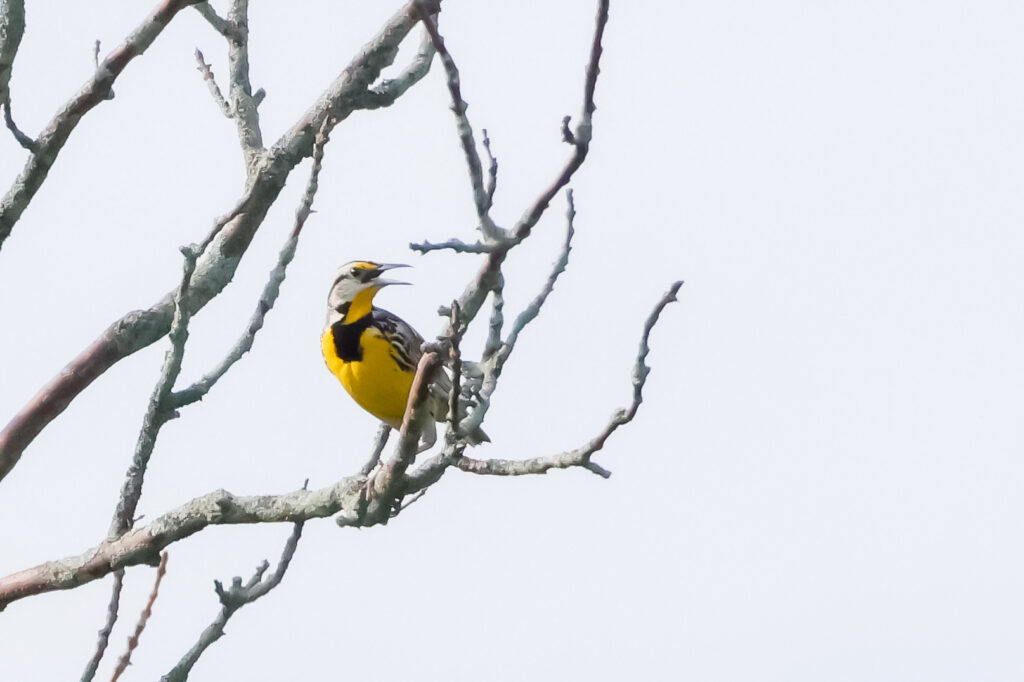
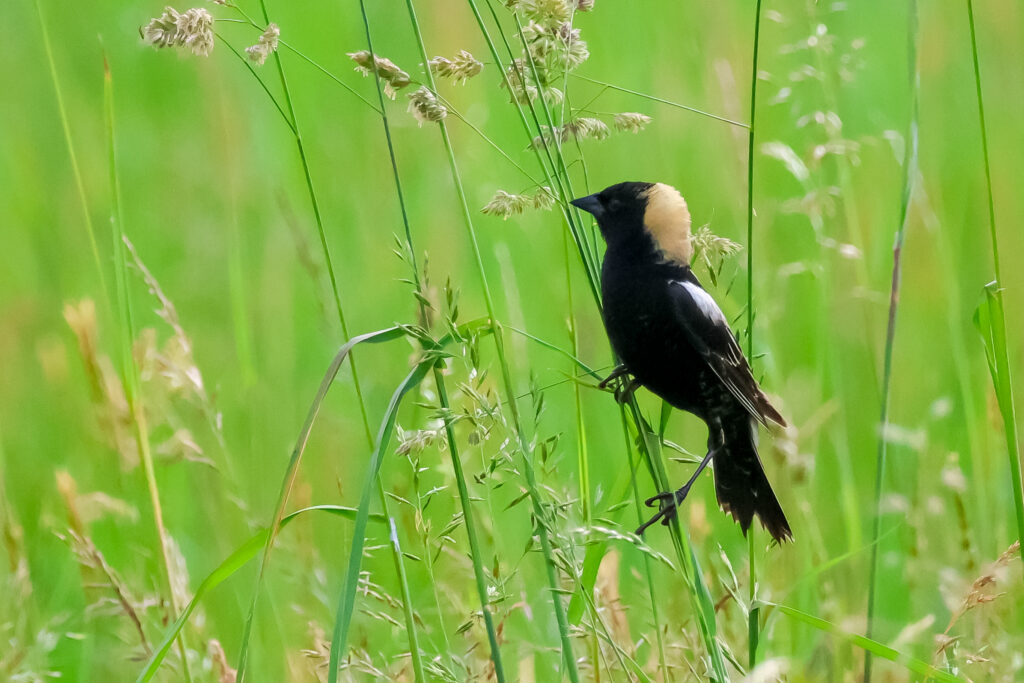
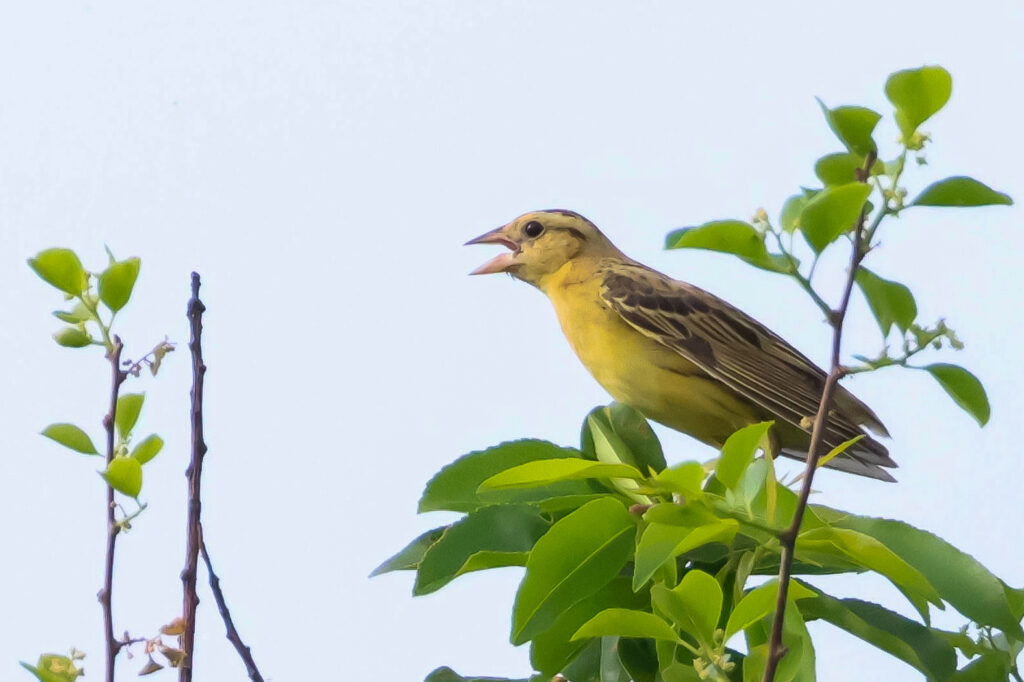
In June, I conducted a field survey at Cogswell’s Grant and confirmed the presence of breeding grassland-nesting species, including multiple nesting pairs of bobolinks (Dolichonyx oryzivorus) and a male eastern meadowlark (Sturnella magna) that was displaying territorial breeding behavior. In Massachusetts, eastern meadowlarks are currently listed as a Species of Special Concern, and both eastern meadowlarks and bobolinks are listed as Species of Greatest Conservation Need, primarily due to the ongoing decline of open grassland habitat. To establish a breeding territory, one male eastern meadowlark needs contiguous field habitat averaging six to eight acres in size, while the territory of a male bobolink can range from one to six acres depending on habitat quality. Cogswell’s Grant is one of the few remaining areas on the northeastern coast of Massachusetts that provides habitat requirements for both species.
Understanding the typical breeding timeline of eastern meadowlarks and bobolinks is critical to developing hay mowing techniques that can help conserve these birds. Eastern meadowlarks arrive in Massachusetts in late March to early April, migrating from their overwintering grounds in the southern United States, Central America, or northern South America. Bobolinks have a longer journey, migrating approximately 6,000 miles from central South America to arrive in Massachusetts by early to mid-May. Shortly after their arrival, males establish and defend their breeding territories, often returning to the same breeding site for multiple years. By late July to early August most nest pairs have successfully fledged offspring. The fledglings quickly learn to fly and hunt on their own before gathering in flocks to start their migration south.
Our suggestions for managing hay fields at Cogswell’s Grant included delayed or partially delayed mowing, which entails timing hay harvests after the majority of young birds have successfully fledged. Seasonal surveys to understand the current status and general locations of nests can also help farmers delay haying in the most densely populated areas of their fields. Farmers at Cogswell’s Grant plan to avoid mowing in the areas where bird activity was most concentrated until at least August. There are also certain techniques that can reduce harm during hay mowing. Farmers at Cogswell’s Grant have agreed to adopt an “inside to outside” mowing pattern that allows recently fledged birds a better chance to escape into wooded edge habitat or a portion of the field not immediately scheduled for mowing instead of concentrating fleeing animals in the remaining grass at the center of a field that is being actively mowed
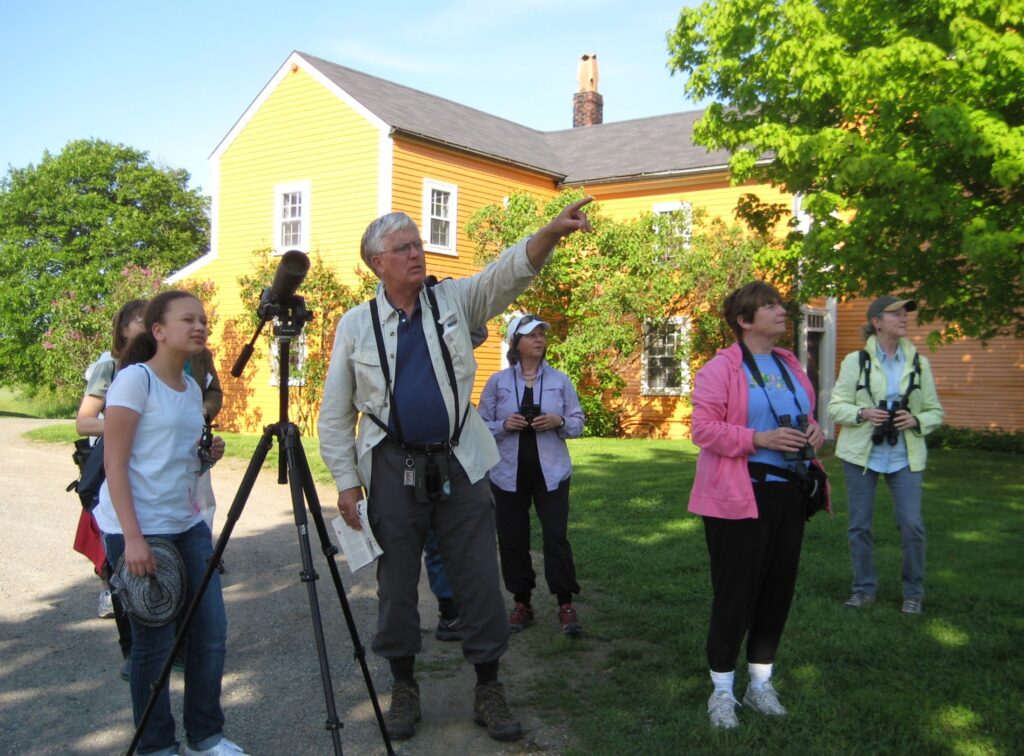
You can also aid in the conservation of grassland-nesting birds by staying on marked trails, following leash guidelines while walking dogs on properties with active nesting, and by keeping cats indoors. You can help all nesting bird species by supporting bird-friendly gardening practices that increase their food supply. This can include removing invasive vegetation, promoting growth of native plant species, and avoiding the use of pesticides and rodenticides that introduce deadly poisons at the base of the local food chain.
Written by Justine Fox
Justine Fox is a Professional Wetland Scientist (PWS) at Williams & Sparages LLC in Middleton, Massachusetts. She specializes in wetland delineations, vernal pool assessments, as well as habitat evaluation and restoration. Before focusing on wetland protection and policy, Justine worked across the continental United States as a wildlife biologist, focusing on the study of reptiles and amphibians, as well as protecting nesting sites for birds of prey in California’s Sierra Nevada Mountains. She holds a BS in environmental science and management (with a minor in restoration science) from the University of Rhode Island. Outside of work, she is an avid recreational birder, rock climber, and enjoys tending to her native pollinator garden.
Sign up to our newsletter for our latest news and events