
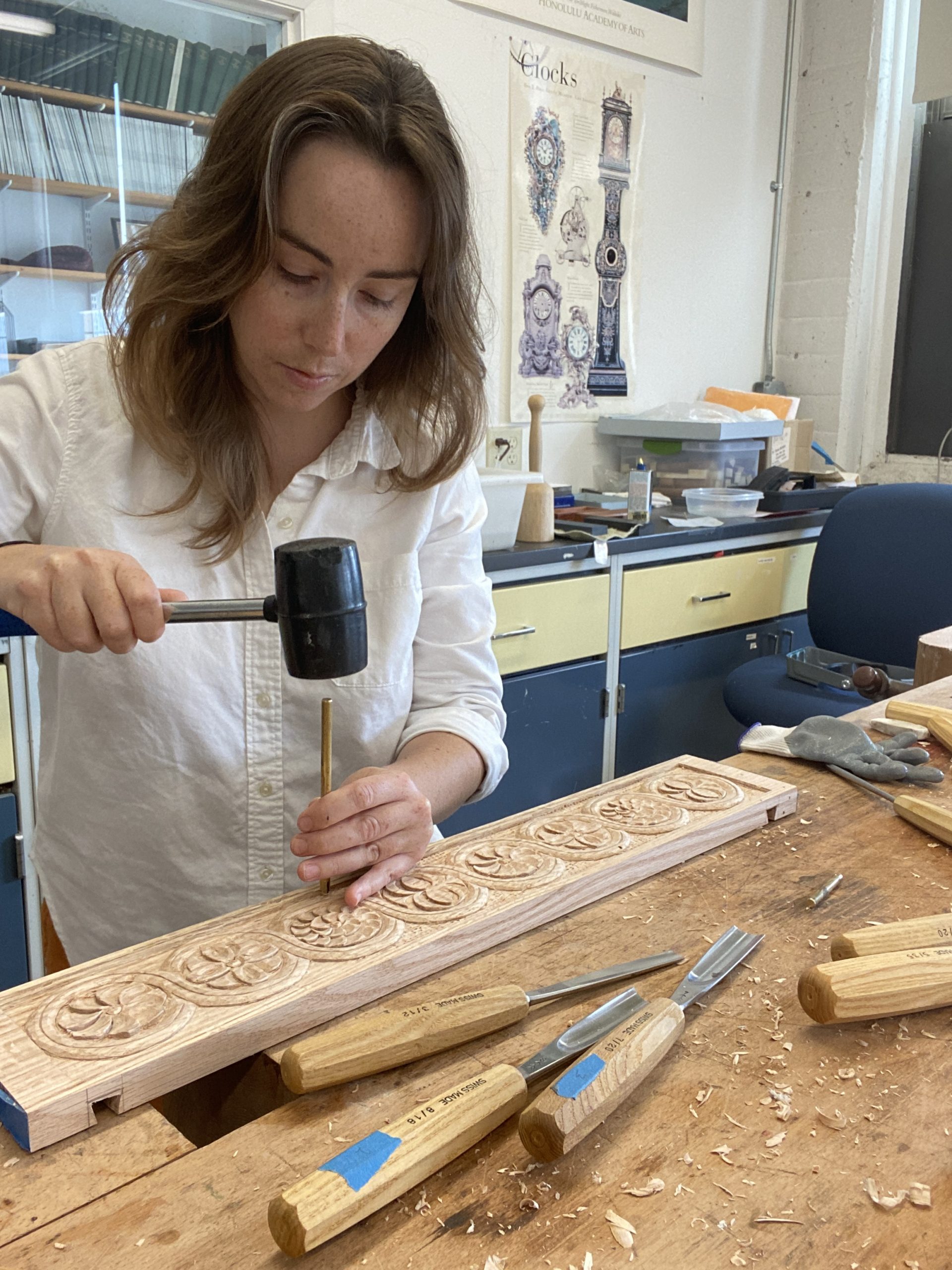
Carvers have used a similar set of tools for centuries: flat-bladed chisels and curved gouges held in one hand, and a mallet for striking the butt of the tool handle in the other. By studying the surface of a similar box at Bowdoin College Museum of Art (see Adventures in Woodworking Part I), Karen was able to identify which tools she needed to create the decorative carving on the drawer front. Each gouge blade has a different curve and size, making a distinct tool mark when tapped into the wood. With the freshly fallen red oak cut to size, Karen laid out the segmented design using a compass and scribe, then cut out the curvilinear pattern using a V-shaped gouge.
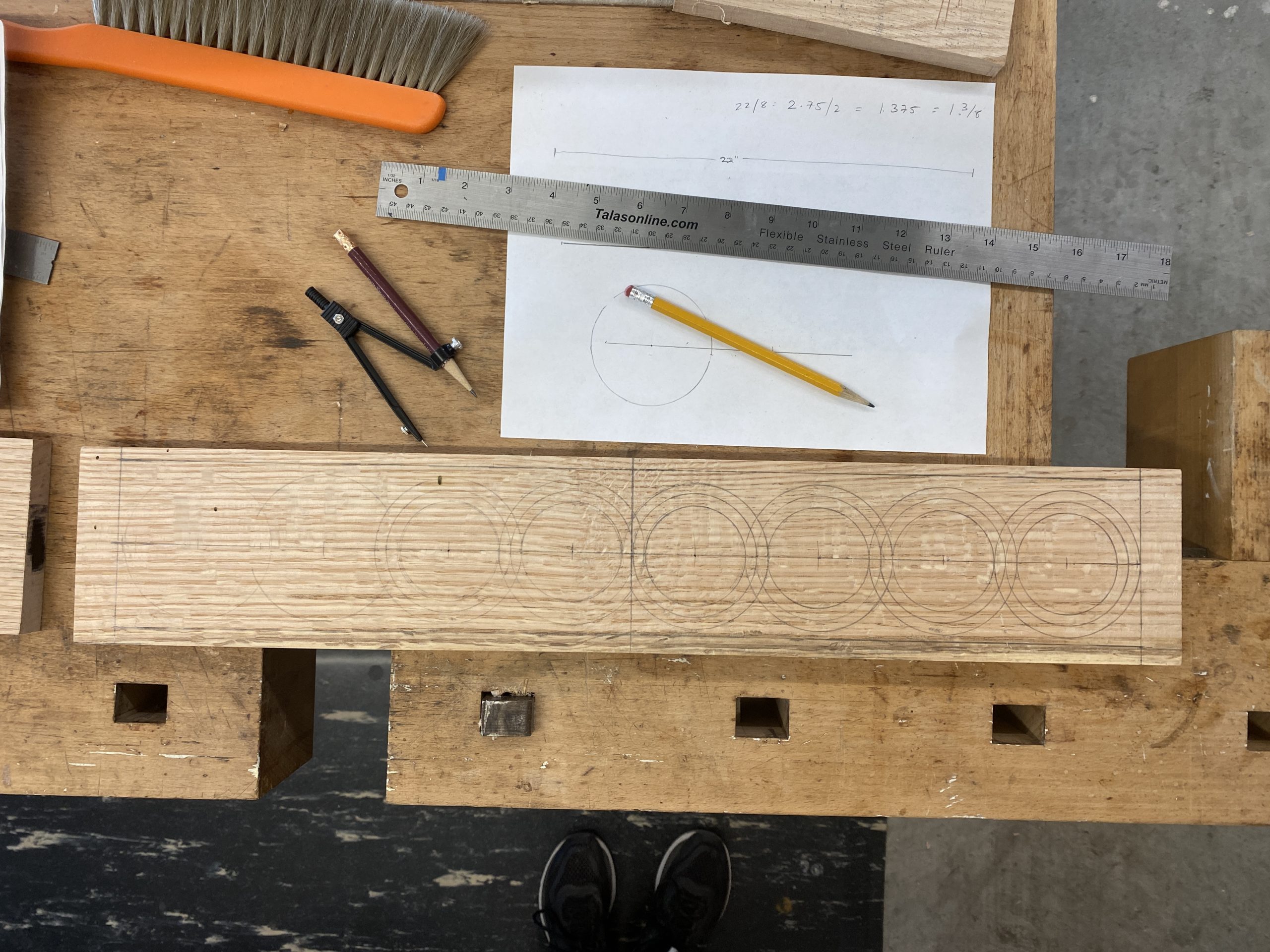
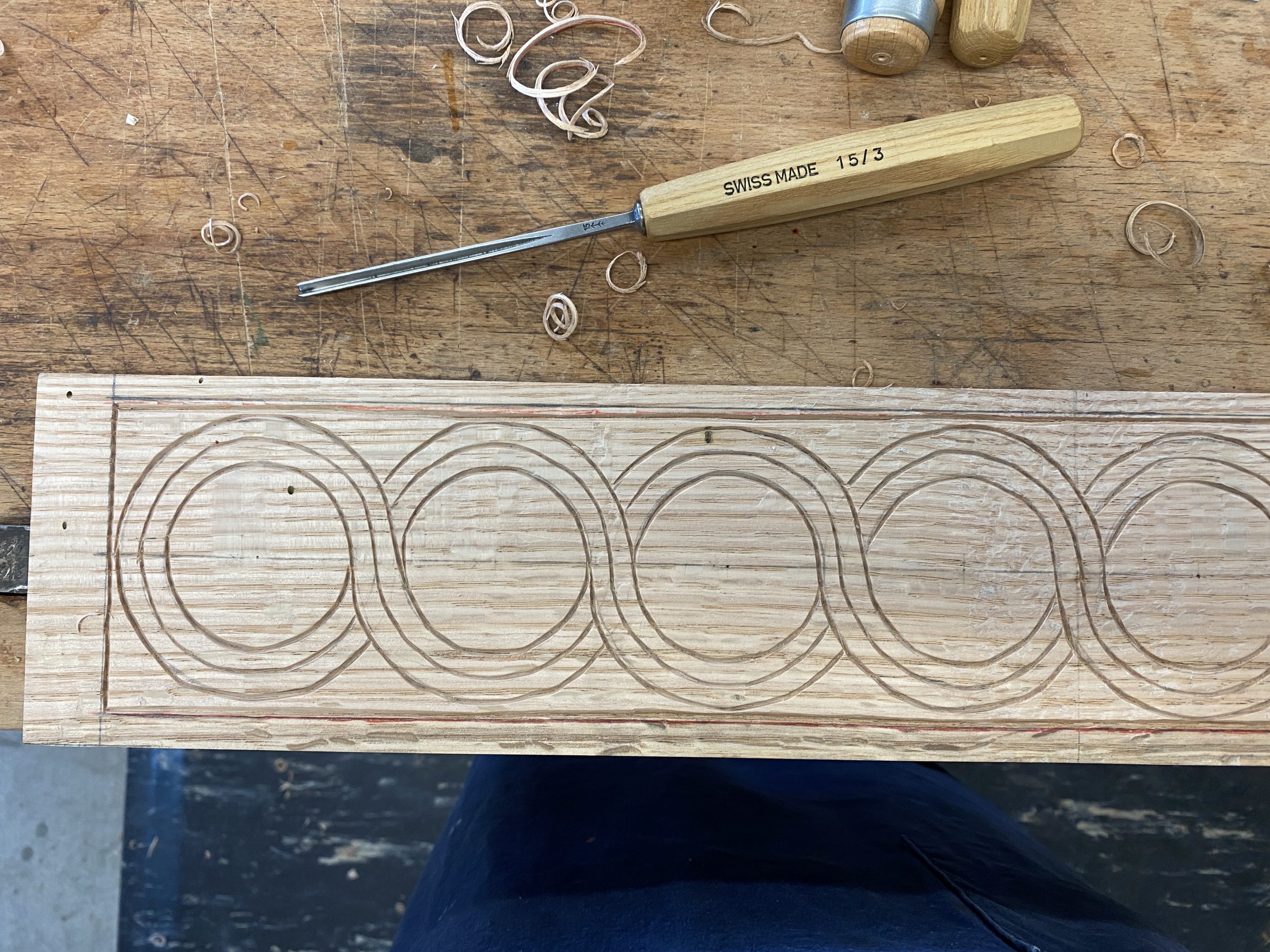
After getting comfortable using the tools on scrap wood, Karen made a mockup of the drawer front. This full-scale version served as further carving practice and helped to determine in what order to cut away the wood. Karen learned to recognize changes in grain direction and how this affected the ease and quality of the cutting action. The mockup also provided plenty of opportunity for tool sharpening, a crucial skill in the carving process.
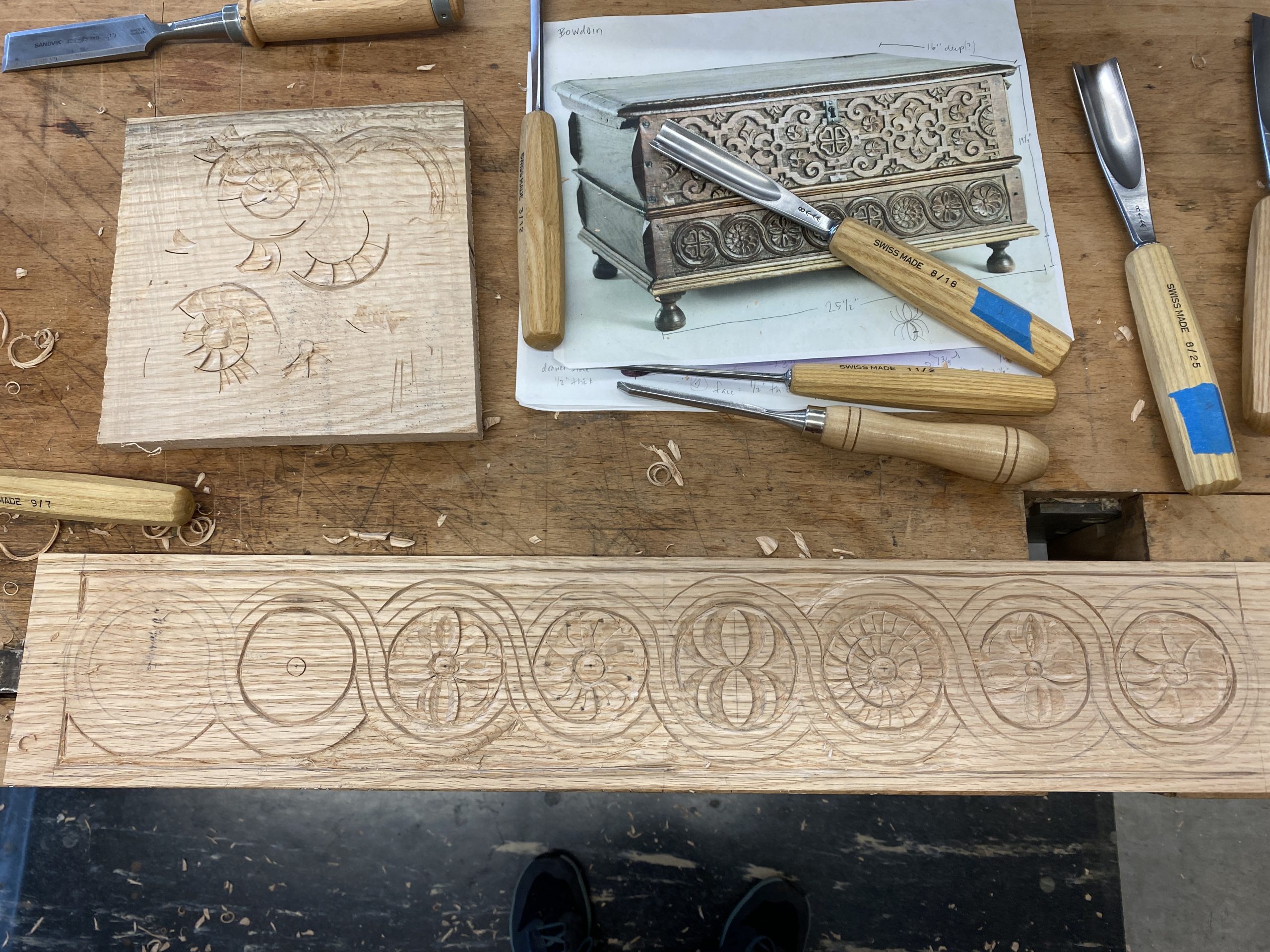
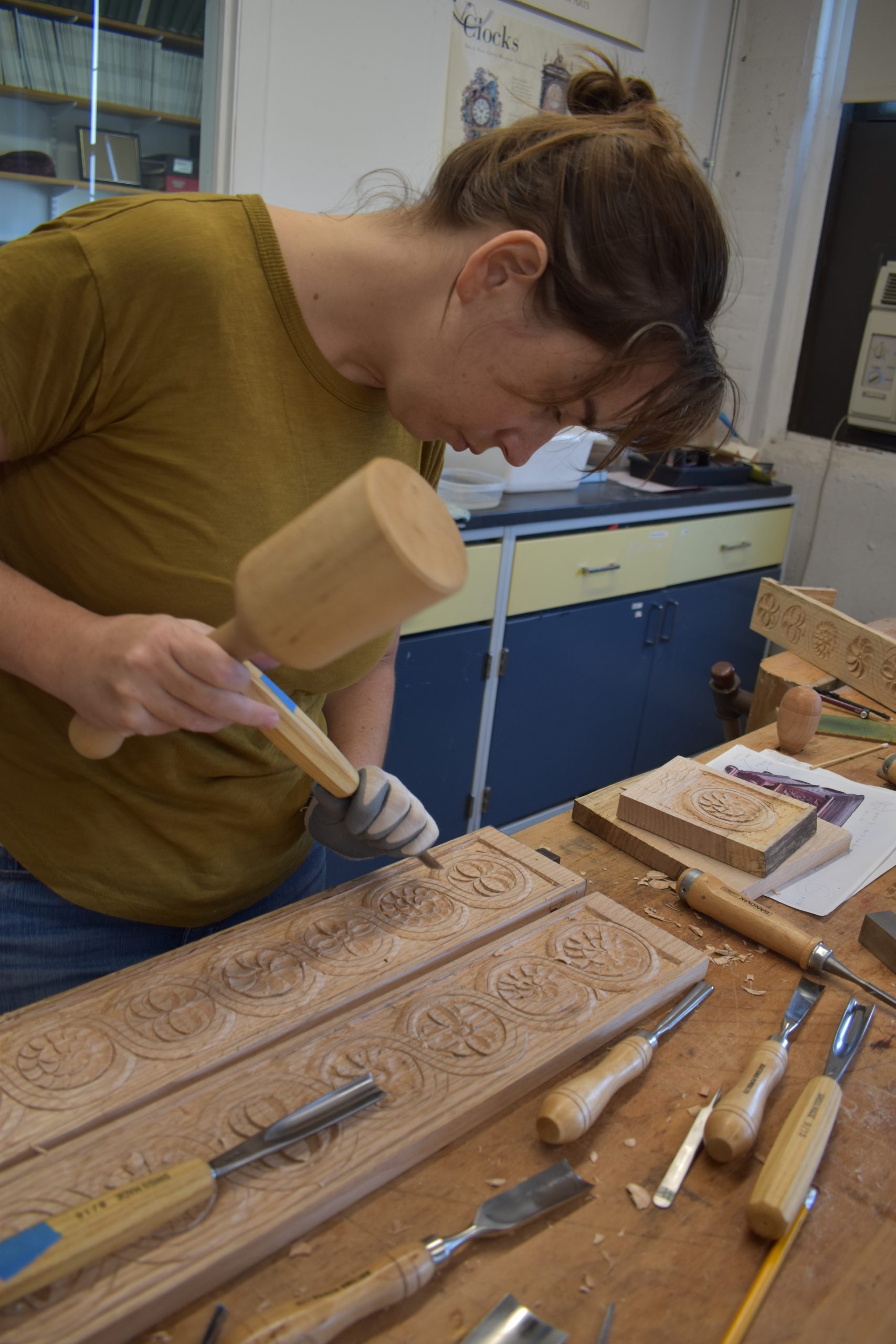
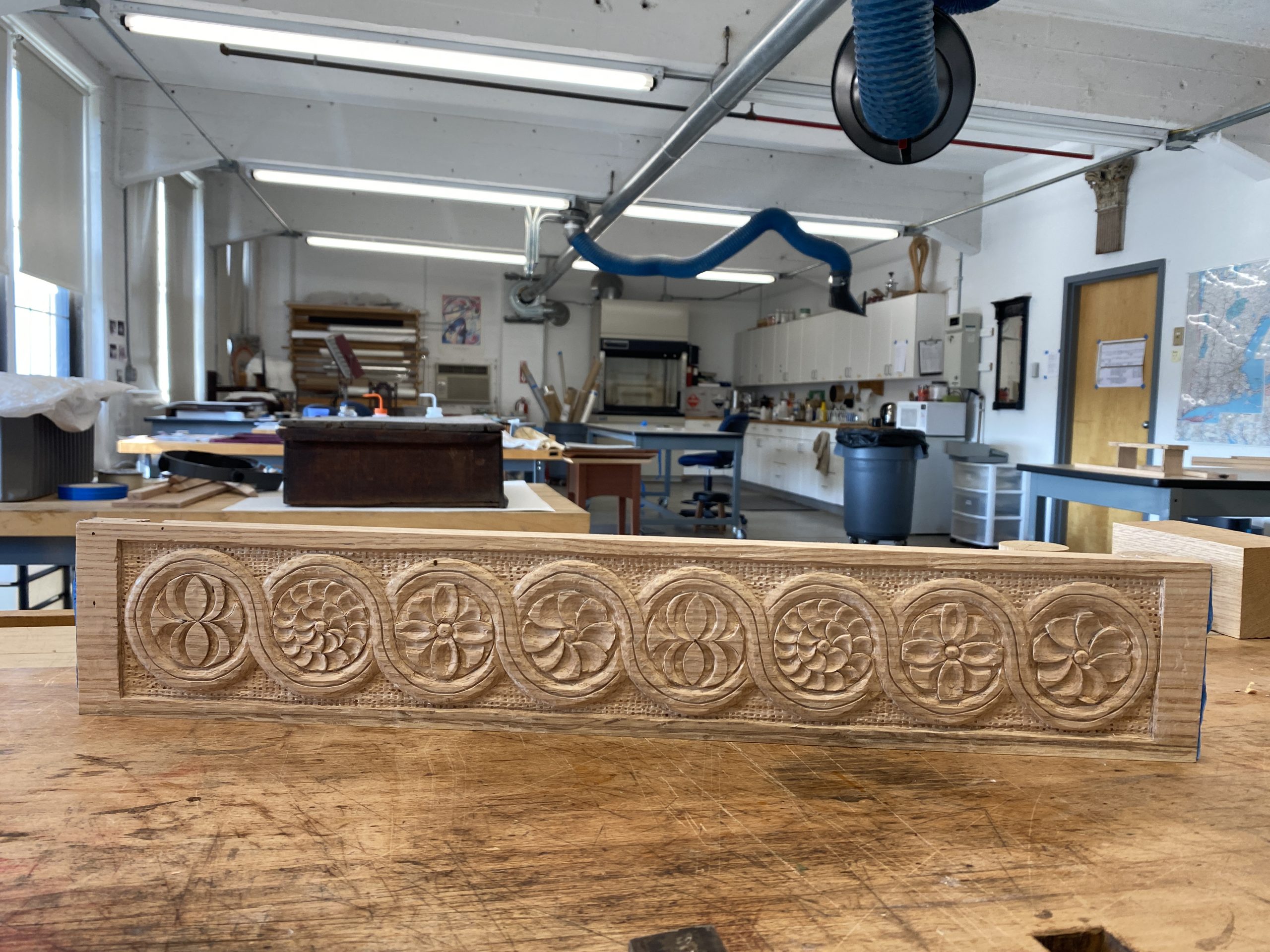
After working on the mockup, Karen made the final drawer front using the same dimensions and design layout. She started by cutting away the background, which is the most deeply recessed part of the relief. Next, she created the floral design inside the circles by using a different gouge for each unique petal shape. Karen then rounded over the serpentine line to create a molded appearance. To make the design stand out even more, the background was textured using a custom-made punch. All the practice paid off, and the final carving was completed in three days.
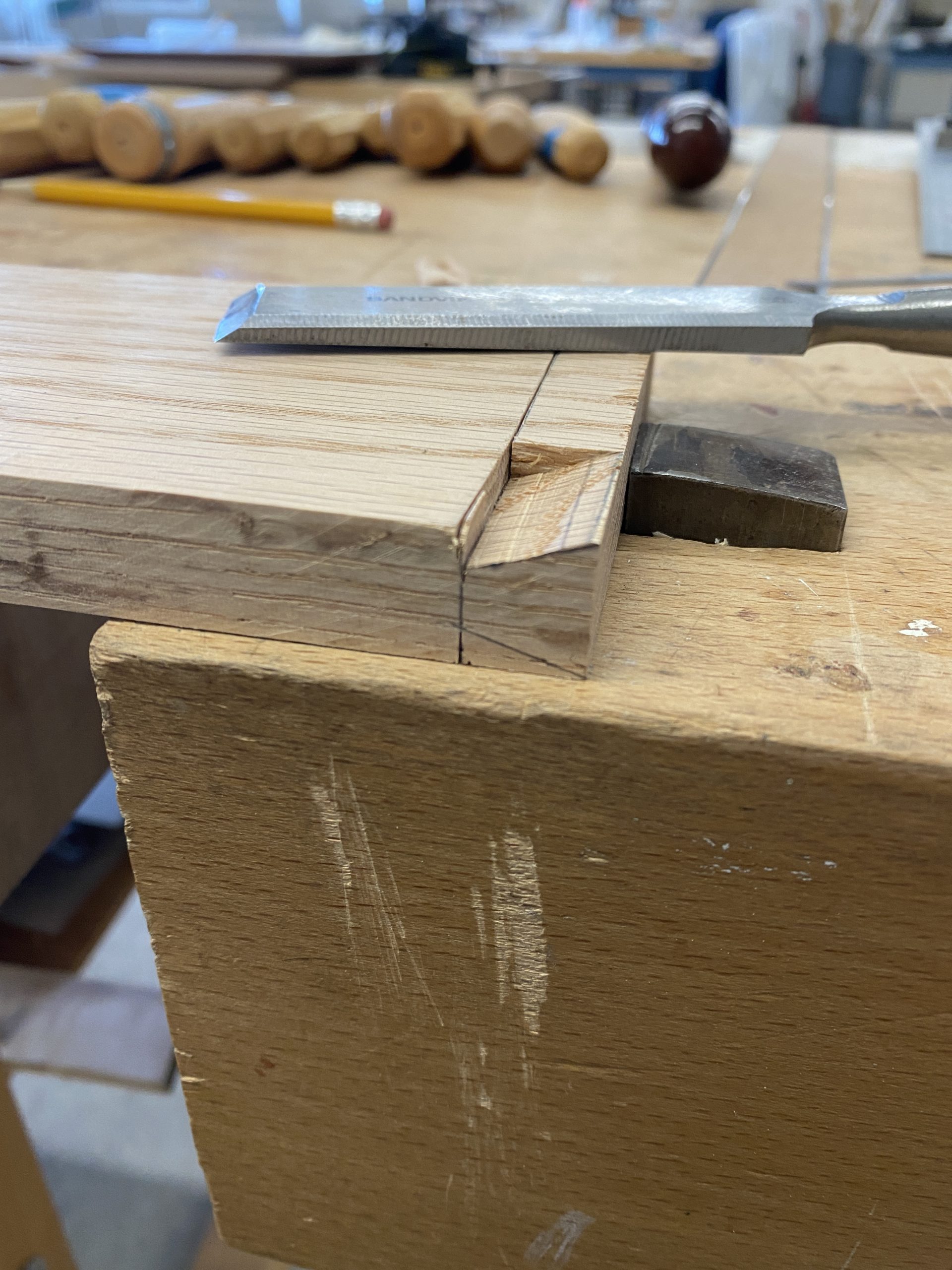
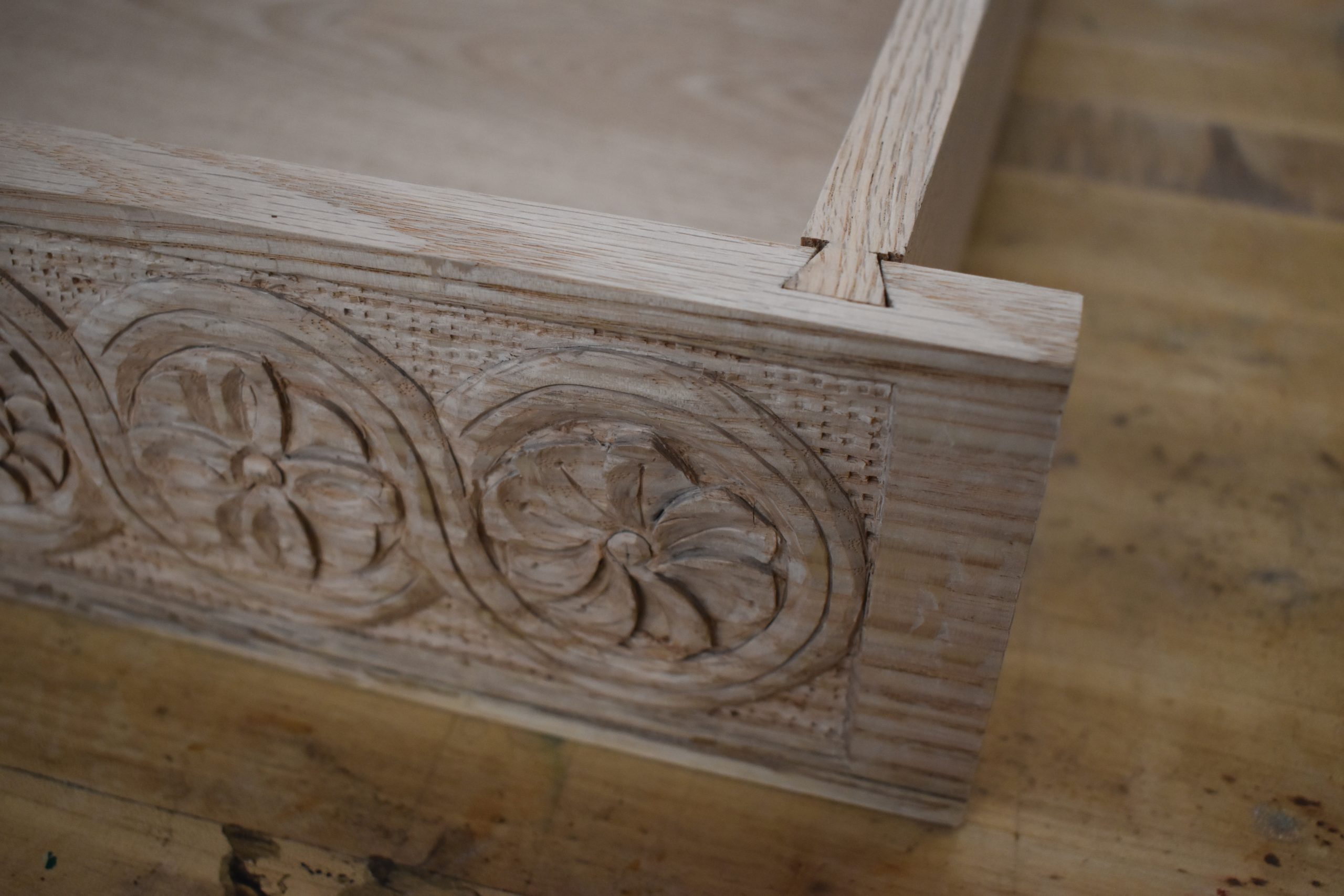
Karen made the rest of the drawer using the same joinery techniques as the Bowdoin example. She cut a triangular shape, or “tail”, into the ends of the drawer sides. Then she traced the size and shape of the tail on the drawer front so that the pieces could slide together, a technique called a sliding dovetail. The drawer back and bottom are attached using nails, again following the example she studied.
Karen Bishop is the Mellon Conservation Fellow at Historic New England.
Sign up to our newsletter for our latest news and events